Pomelo - What's the Pomelo Fruit?
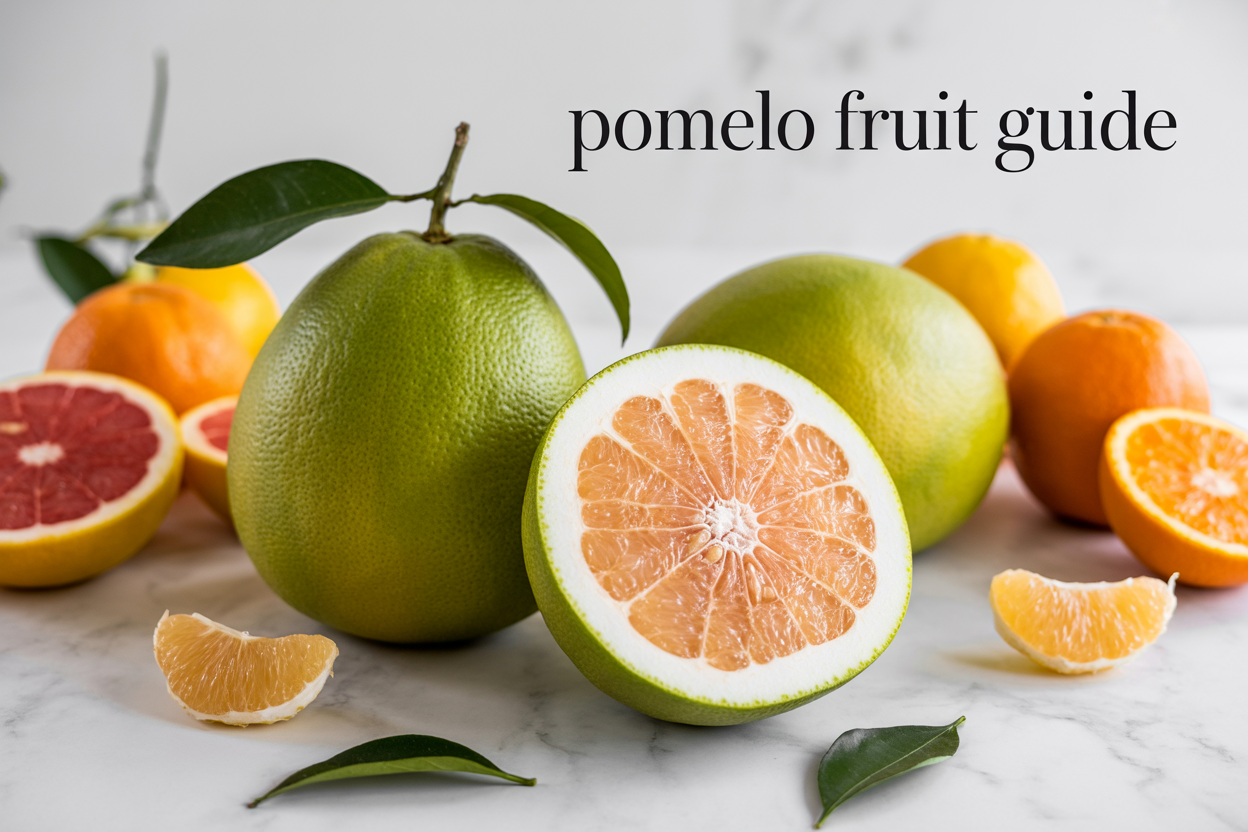
Ever wondered about that giant citrus fruit taking up serious real estate in your grocery store's produce section? Meet the pomelo fruit – the largest member of the citrus family that's packed with surprising benefits and flavor.
This guide is perfect for curious food lovers, health-conscious eaters, and anyone who's ever walked past a pomelo wondering "what is pomelo, anyway?" You'll discover what makes this citrus fruit special, from its impressive nutritional benefits to simple preparation techniques that'll have you enjoying this tropical treat like a pro.
We'll cover the pomelo's fascinating origins and unique characteristics that set it apart from regular oranges and grapefruits. You'll also learn how to choose the perfect pomelo at the store and master easy preparation methods that make eating this large fruit a breeze. Plus, we'll explore the impressive health benefits that make pomelo worth adding to your regular fruit rotation.
Discover the Origins and Characteristics of Pomelo
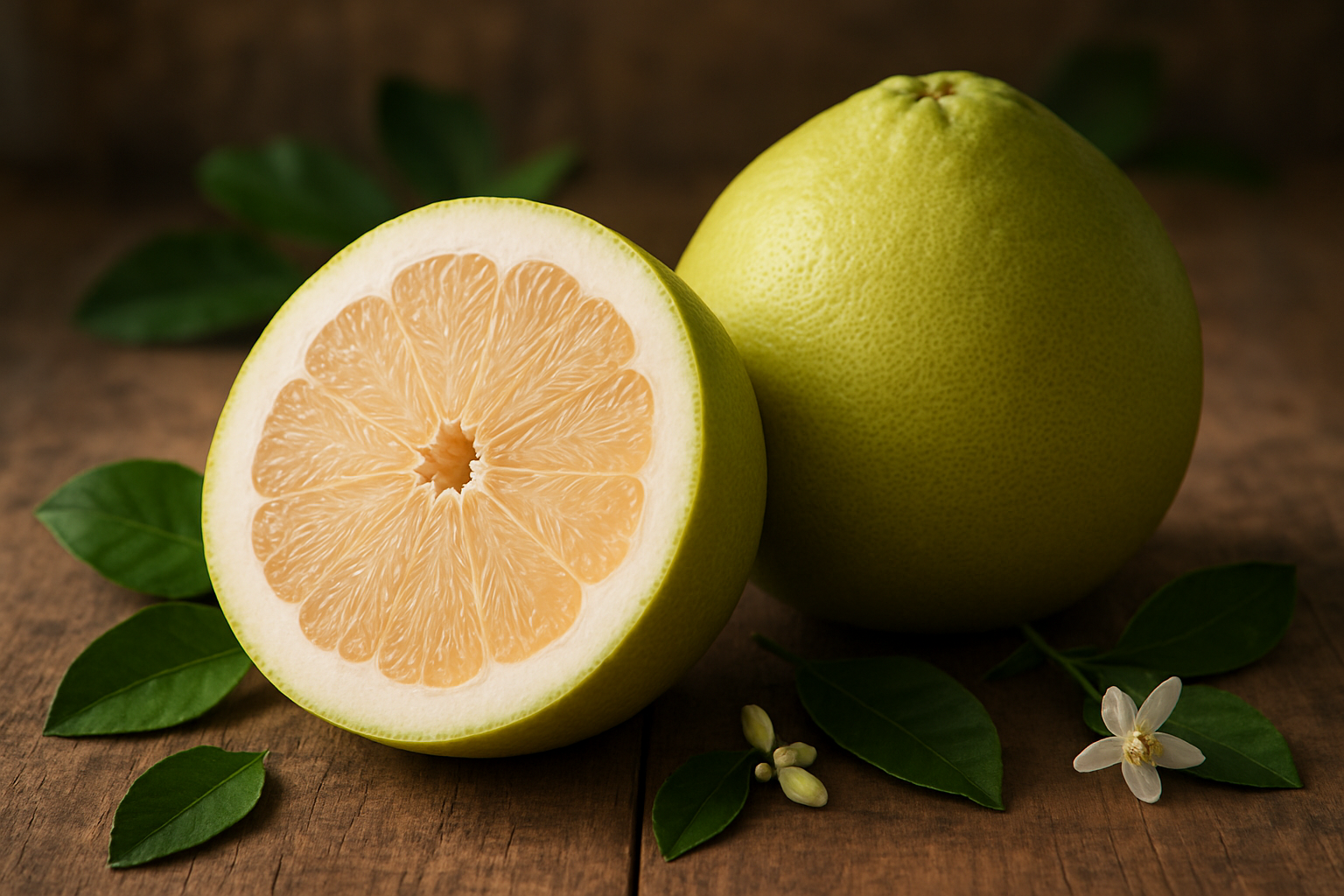
Learn About Pomelo's Native Southeast Asian Heritage
The pomelo fruit traces its roots back thousands of years to Southeast Asia, where it first grew wild in the tropical regions of Malaysia, Thailand, and southern China. This ancient pomelo citrus fruit became deeply woven into local cultures and cuisines, with early traders carrying seeds along maritime routes throughout Asia. Archaeological evidence suggests that people have been cultivating pomelos for over 4,000 years, making it one of the oldest known citrus varieties.
Traditional Chinese medicine has long valued pomelo for its cooling properties, while in Thailand, the fruit holds special significance during festivals and religious ceremonies. Malaysian and Indonesian cultures incorporated pomelo into both sweet and savory dishes, recognizing its versatility long before it spread to other continents. The fruit's name varies across regions - "som-o" in Thai, "youzi" in Chinese, and "jeruk bali" in Indonesian - each reflecting local linguistic traditions.
European explorers and traders introduced pomelo to the Caribbean and Americas in the 17th century, though it remained relatively unknown in Western countries until recent decades. Today, major pomelo-producing regions include China, Thailand, Vietnam, Israel, and parts of California and Florida.
Understand Why Pomelo is the Largest Citrus Fruit
What is pomelo that makes it stand out from other citrus fruits? Size is the most obvious answer. Pomelos are genuine giants in the citrus world, typically weighing between 2-4 pounds, though some exceptional specimens can reach up to 6 pounds or more. This massive size comes from the fruit's unique genetic makeup and growing characteristics that distinguish it from its citrus cousins.
The impressive dimensions of pomelo fruit result from several factors:
-
Extended growing season: Pomelos take 8-12 months to fully mature, compared to 6-8 months for most other citrus fruits
-
Tree characteristics: Pomelo trees can grow 15-25 feet tall with broad canopies that support larger fruit development
-
Genetic factors: The fruit contains more pulp vesicles and thicker rinds than smaller citrus varieties
-
Growing conditions: Optimal tropical and subtropical climates allow for maximum size development
The substantial size doesn't just make pomelos impressive to look at - it also means more fruit per piece, making them economical choices despite higher individual prices. A single pomelo can provide enough segments to serve multiple people, unlike oranges or grapefruits that typically serve one person.
Recognize Key Physical Features That Set Pomelo Apart
Beyond size, pomelos display distinctive physical characteristics that make them easily recognizable. The pomelo fruit typically has a pear-like or round shape with a slightly flattened appearance at both ends. The rind color ranges from pale green to bright yellow, depending on the variety and ripeness level.
Key identifying features include:
| Feature | Description |
|---|---|
| Rind thickness | 1-2 inches thick, much thicker than other citrus fruits |
| Pith color | White, spongy layer beneath the rind |
| Segment appearance | Large, easily separated segments with minimal seeds |
| Flesh colors | White, pink, or red depending on variety |
| Texture | Firm, less juicy than grapefruit, with a pleasant bite |
The thick rind serves as natural protection, allowing pomelos to ship well and store for extended periods. When you press the rind, it should give slightly but spring back, indicating proper ripeness. The surface often has a slightly bumpy texture, unlike the smoother skin of oranges or grapefruits.
Inside, pomelo segments are notably dry compared to other citrus fruits, with a texture somewhere between grapefruit and orange. The flesh separates cleanly from the bitter white membrane, making it easier to eat than grapefruit. Seeds are typically few and large, though some varieties are nearly seedless.
Unlock the Impressive Nutritional Benefits of Pomelo
Boost Your Immune System with High Vitamin C Content
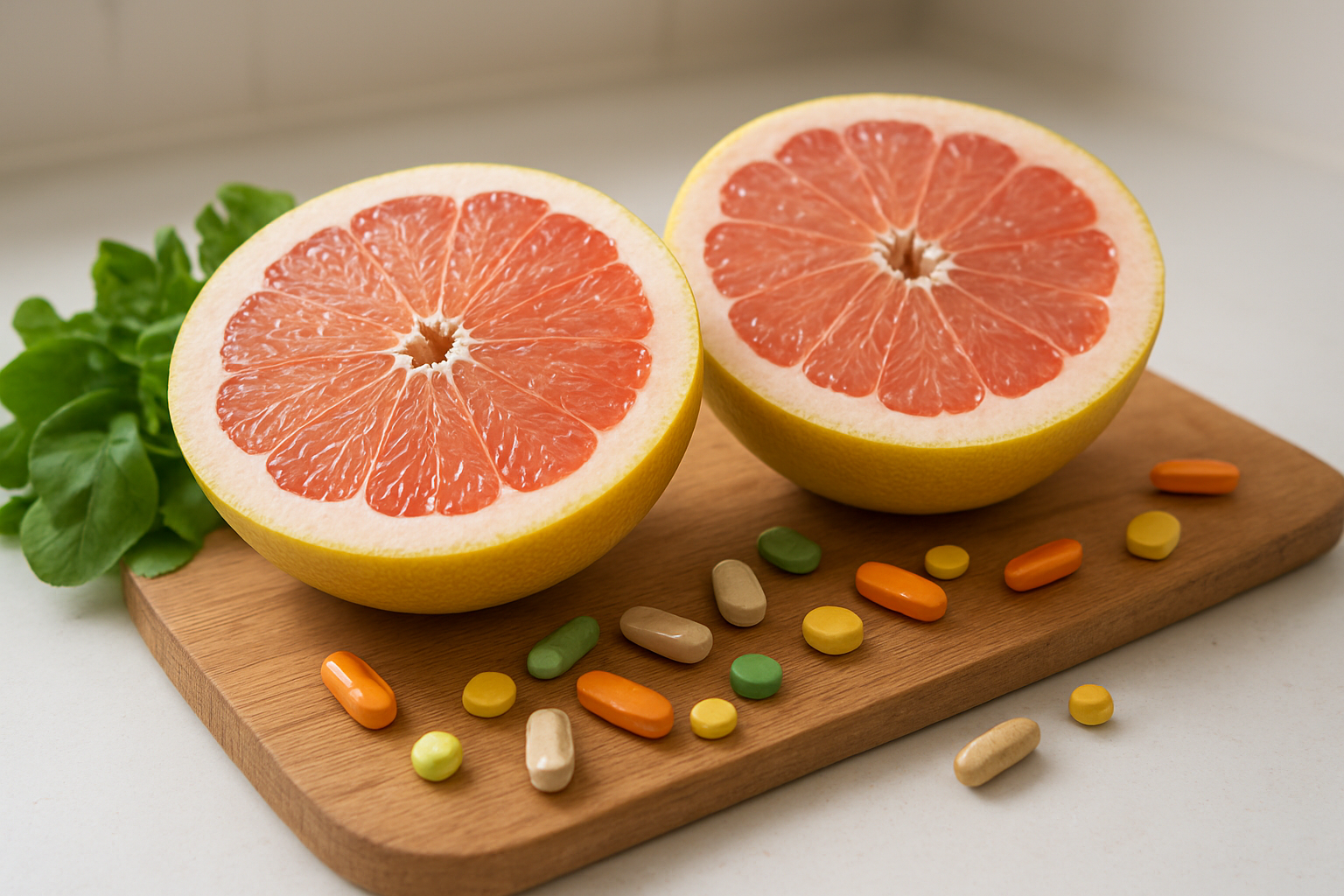
Pomelo fruit packs an incredible punch when it comes to vitamin C, delivering approximately 115-130% of your daily recommended intake in just one cup of segments. This impressive vitamin C content makes pomelo nutritional benefits particularly valuable during cold and flu seasons. Your immune system relies heavily on this powerful antioxidant to produce white blood cells and antibodies that fight off infections and viruses.
The vitamin C in pomelo also acts as a potent antioxidant, protecting your cells from damage caused by free radicals. This protection helps reduce inflammation throughout your body and supports faster wound healing. Regular consumption of pomelo citrus fruit can help maintain consistent vitamin C levels, which your body can't store for extended periods.
Support Heart Health Through Potassium and Fiber
Your cardiovascular system benefits tremendously from pomelo's rich potassium and fiber content. A single pomelo contains around 400-500mg of potassium, which helps regulate blood pressure by counteracting sodium's effects in your bloodstream. This mineral relaxes blood vessel walls and supports proper heart rhythm.
The soluble fiber in pomelo works to lower cholesterol levels by binding to cholesterol particles in your digestive system and removing them from your body. Studies show that people who eat fiber-rich fruits like pomelo have lower rates of heart disease and stroke. The pectin found in pomelo specifically helps reduce LDL (bad) cholesterol while maintaining healthy HDL (good) cholesterol levels.
Aid Weight Management with Low Calorie Density
Pomelo fruit benefits those looking to maintain or lose weight due to its remarkably low calorie density. One cup of pomelo segments contains only 70-80 calories while providing substantial volume and nutrition. The high water content (about 89%) helps you feel full without consuming excess calories.
The fiber in pomelo slows digestion and helps stabilize blood sugar levels, preventing the energy crashes that often lead to unhealthy snacking. This natural satiety makes pomelo an excellent choice for anyone watching their caloric intake while still wanting to enjoy something sweet and satisfying.
Strengthen Bones with Essential Minerals
Beyond vitamin C and potassium, pomelo provides essential minerals that support bone health throughout your lifetime. The fruit contains meaningful amounts of calcium, magnesium, and phosphorus - three minerals that work together to build and maintain strong bones.
Calcium provides the structural foundation for your bones, while magnesium helps your body absorb and utilize calcium effectively. Phosphorus works alongside calcium to form hydroxyapatite, the mineral complex that gives bones their hardness. The vitamin C in pomelo also supports collagen production, which forms the flexible framework that holds calcium deposits together in your bone matrix.
Regular consumption of pomelo health benefits becomes particularly important as you age, when bone density naturally begins to decline. The combination of these bone-supporting nutrients makes pomelo a smart addition to any diet focused on long-term skeletal health.
Master the Art of Selecting and Preparing Perfect Pomelo
Choose Ripe Pomelo Using Color and Touch Techniques
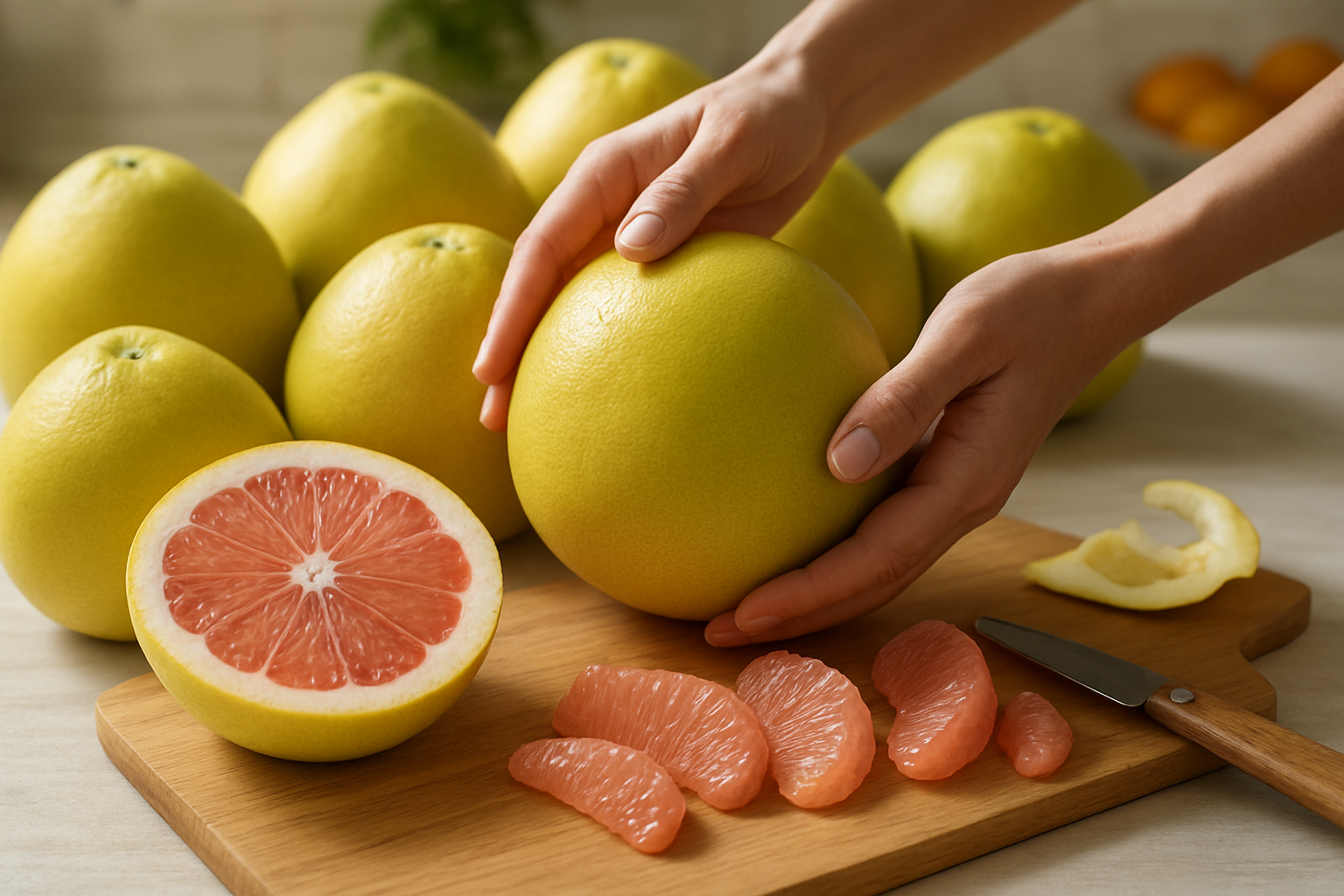
The key to enjoying pomelo fruit starts with picking the perfect one. Look for a pomelo with bright, even-colored skin that feels smooth and slightly glossy. A ripe pomelo typically displays a pale yellow or greenish-yellow hue, depending on the variety. Pink pomelos may show subtle pinkish tones on their skin.
Weight tells you everything about quality. A good pomelo should feel heavy for its size, indicating plenty of juice inside. When you gently press the skin, it should give slightly but spring back immediately. Avoid fruits with soft spots, dark patches, or wrinkled areas, as these signal overripeness or damage.
The stem end provides another clue - it should smell fresh and citrusy without any sour or fermented odors. A properly ripe pomelo will have a firm, slightly springy texture when you apply gentle pressure. Don't worry if the skin appears thick; that's completely normal for this citrus fruit.
Check the shape too. Round, symmetrical pomelos usually offer the best eating experience. Irregularly shaped fruits often have uneven ripening or damage inside.
Store Pomelo Properly to Maximize Freshness
Proper storage keeps your pomelo fresh and delicious for weeks. At room temperature, whole pomelos stay fresh for about one week. For longer storage, refrigerate them in the crisper drawer where they'll maintain quality for up to one month.
Keep pomelos away from other fruits that produce ethylene gas, like apples and bananas, which can cause premature ripening. Store them in a breathable bag or loose in the refrigerator to prevent moisture buildup.
Once you've peeled and segmented your pomelo, refrigerate the pieces in an airtight container. Fresh pomelo segments stay good for 3-4 days when properly stored. For best taste, bring refrigerated pomelo back to room temperature before eating.
Never store cut pomelo at room temperature for more than a few hours, as the exposed flesh spoils quickly. If you notice any off smells or slimy texture, discard the fruit immediately.
Peel and Segment Pomelo Like a Professional
Peeling pomelo requires a different approach than other citrus fruits due to its thick, spongy pith. Start by cutting off both ends of the fruit with a sharp knife, exposing the flesh beneath.
Score the skin from top to bottom in 6-8 sections, cutting only through the outer peel without damaging the fruit inside. Peel away each section of skin, working your fingers under the thick white pith to separate it from the flesh.
The white pith on pomelo is particularly thick and bitter, so remove it completely. Once you've removed the outer layers, you'll see the individual segments separated by thin membranes. Gently pull apart each segment, then carefully peel away the tough membrane surrounding each piece.
Some people prefer to cut the peeled pomelo in half and scoop out segments with a spoon. This method works especially well for very large pomelos. Take your time with this process - the extra effort pays off with perfectly clean, sweet pomelo segments ready for eating or adding to your favorite recipes.
Explore Delicious Ways to Enjoy Pomelo in Your Diet
Create Refreshing Pomelo Salads and Appetizers
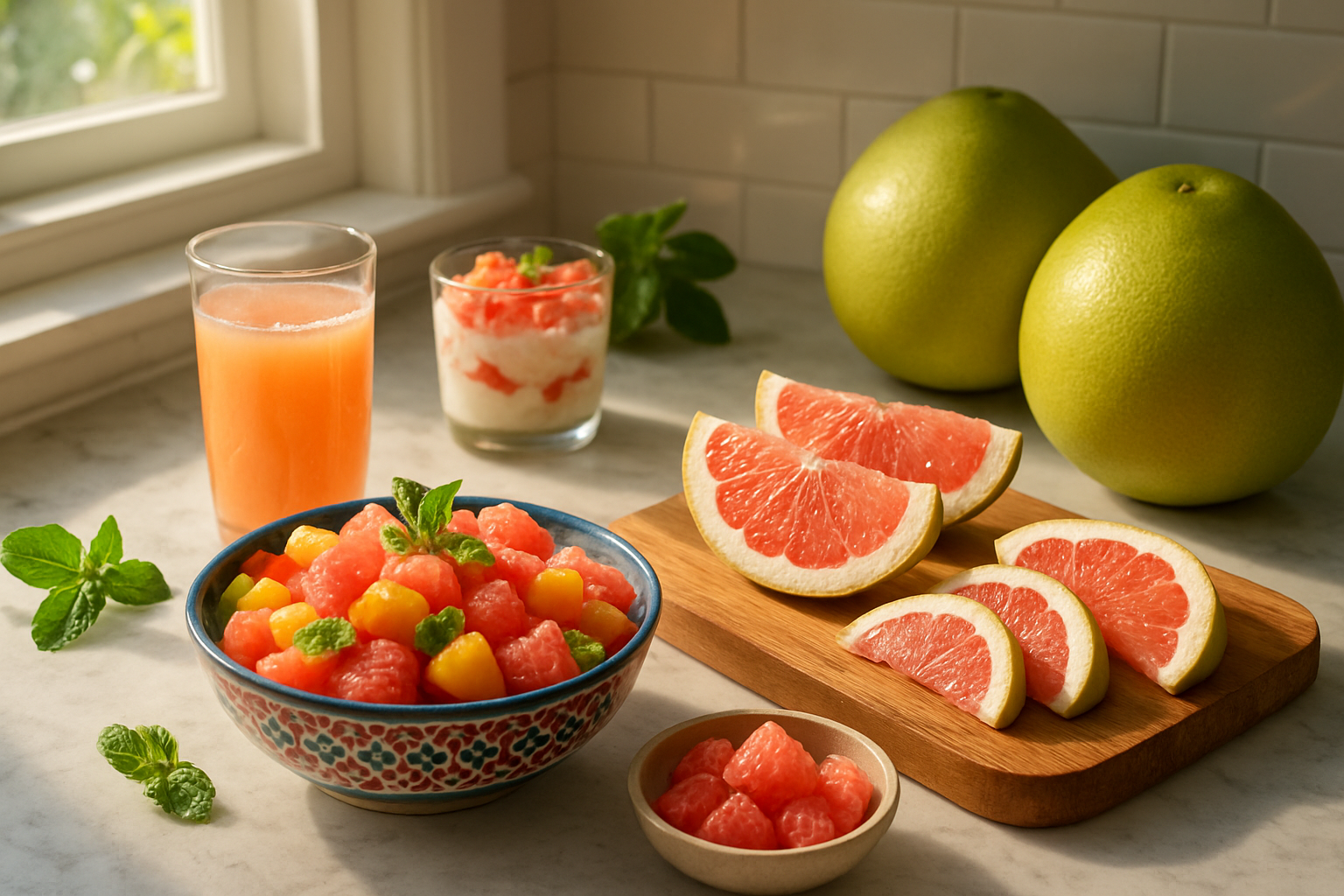
Transform your pomelo fruit into stunning salads that bring tropical flair to any meal. Start with a Thai-inspired pomelo salad by combining fresh pomelo segments with shredded green papaya, carrots, and crisp cucumber. Toss everything with a zesty dressing made from lime juice, fish sauce, palm sugar, and chili flakes. The sweet-tart pomelo citrus fruit balances perfectly with the bold flavors.
For elegant appetizers, wrap pomelo segments with prosciutto or smoked salmon, creating bite-sized flavor bombs. The citrus cuts through rich meats beautifully. You can also create colorful pomelo cups by hollowing out pomelo shells and filling them with a mixture of pomelo flesh, diced avocado, mint, and a light vinaigrette.
Mediterranean-style pomelo salads work wonderfully too. Mix pomelo segments with baby arugula, crumbled feta cheese, toasted pine nuts, and a simple olive oil dressing. The pomelo's natural sweetness complements the peppery greens and salty cheese perfectly.
Blend Pomelo into Smoothies and Juices
Fresh pomelo makes an excellent base for morning smoothies, offering natural sweetness without overwhelming tartness. Blend pomelo segments with frozen mango, banana, and coconut water for a tropical paradise in a glass. The pomelo nutritional benefits shine through while creating a refreshing drink.
For green smoothies, combine pomelo with spinach, cucumber, ginger, and apple. The citrus masks any bitter vegetable flavors while providing vitamin C and fiber. Add Greek yogurt for extra protein and creaminess.
Pure pomelo juice delivers concentrated flavor and nutrients. Extract juice by pressing pomelo segments through a fine-mesh strainer or using a citrus juicer. Mix pomelo juice with sparkling water and fresh herbs like mint or basil for a sophisticated mocktail. You can also blend pomelo juice with other citrus fruits to create custom flavor profiles.
Incorporate Pomelo into Desserts and Sweet Treats
Pomelo's natural sweetness makes it perfect for lighter desserts. Create pomelo granita by freezing pomelo juice with a touch of honey, scraping the mixture periodically to achieve the perfect icy texture. This refreshing treat showcases the pure pomelo fruit flavor.
Pomelo segments work beautifully in fruit tarts and pavlovas. Their size and firm texture hold up well during baking, while their juice adds moisture and flavor. Try folding pomelo pieces into cheesecake batter or using them as a topping for vanilla panna cotta.
For chocolate lovers, pomelo and dark chocolate pair surprisingly well. The citrus brightness cuts through rich chocolate, creating sophisticated desserts. Dip pomelo segments in melted dark chocolate or incorporate pomelo zest into chocolate truffles for an unexpected twist.
Use Pomelo as a Healthy Snack Alternative
Keep pre-segmented pomelo in your refrigerator for quick, healthy snacking. The pomelo health benefits include high vitamin C content and fiber, making it more satisfying than processed snacks. Its natural sweetness curbs sugar cravings while providing sustained energy.
Pack pomelo segments in lunch boxes or take them to work as an afternoon pick-me-up. Unlike many fruits, pomelo segments maintain their texture and don't get mushy when stored properly. They're less messy than oranges and easier to eat than grapefruits.
Create pomelo "candy" by dehydrating thin pomelo slices until chewy. This concentrates the flavors while creating a portable snack that satisfies sweet tooth cravings naturally. The dried pomelo retains many nutritional benefits while offering a longer shelf life than fresh fruit.
Compare Pomelo to Other Popular Citrus Fruits
Understand How Pomelo Differs from Grapefruit
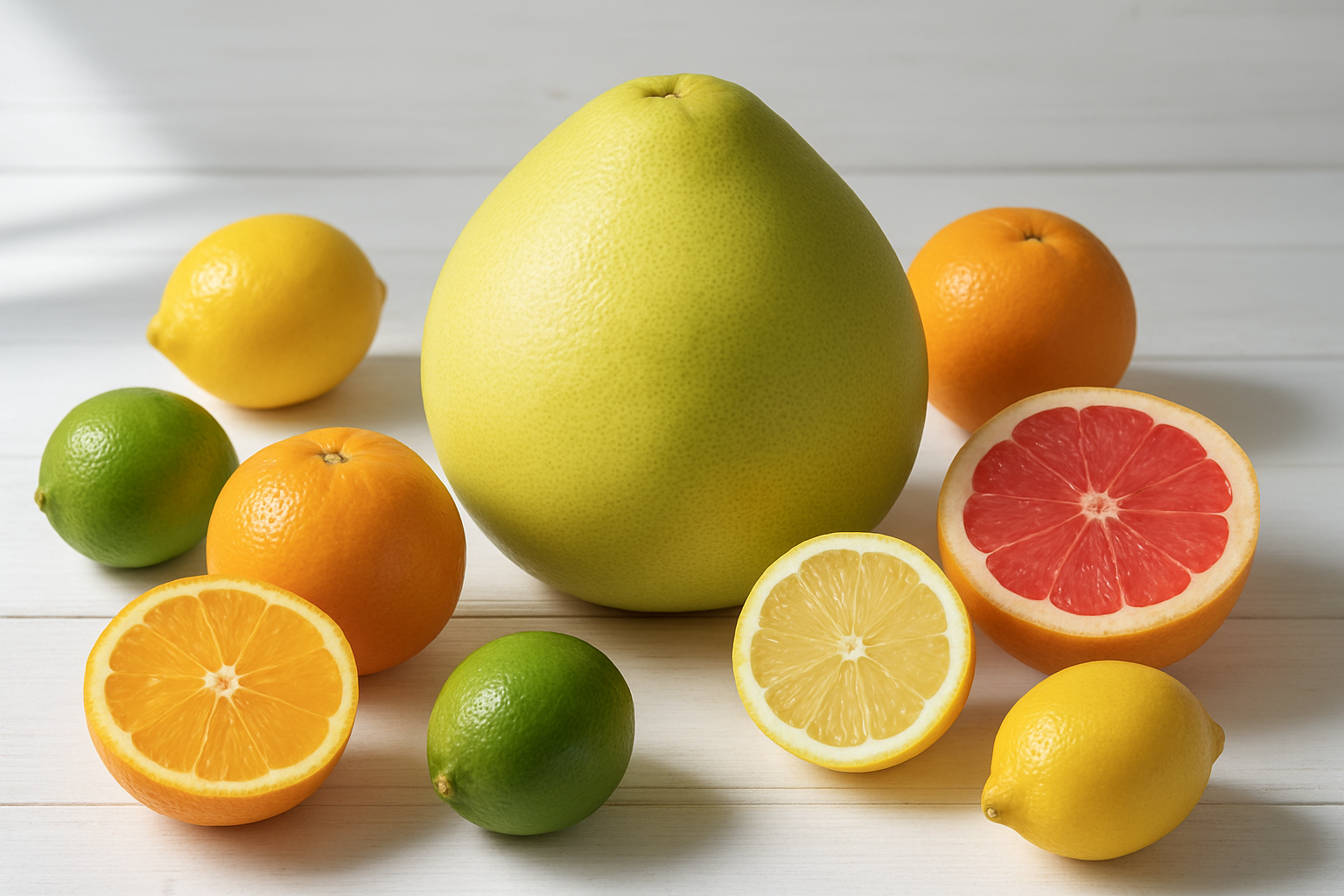
Many people confuse pomelo fruit with grapefruit, but these citrus fruits have distinct differences that set them apart. Pomelo is the largest citrus fruit, often weighing between 2-4 pounds, while grapefruit typically weighs around 1-2 pounds. The pomelo's thick, spongy peel makes up a significant portion of its size, creating a dramatically different eating experience.
When you look at the flesh, pomelo vs grapefruit differences become even more apparent. Pomelo segments are larger, drier, and less juicy than grapefruit. The membrane surrounding pomelo segments is much thicker and tougher, requiring removal before eating, unlike grapefruit where you can bite through the membrane easily.
The flavor profiles also differ significantly. While grapefruit carries that characteristic bitter-tart punch, pomelo citrus fruit offers a milder, sweeter taste with subtle floral notes. This makes pomelo more approachable for people who find grapefruit too intense or bitter.
| Feature | Pomelo | Grapefruit |
|---|---|---|
| Size | 6-12 inches diameter | 4-6 inches diameter |
| Weight | 2-4 pounds | 1-2 pounds |
| Peel thickness | Very thick (1-2 inches) | Moderate (0.5 inches) |
| Bitterness level | Mild | Moderate to high |
| Juice content | Lower | Higher |
Learn Why Pomelo is Sweeter Than Most Citrus Options
The sweetness of pomelo makes it stand out among citrus fruits. This natural sweetness comes from its lower acidity levels and higher sugar content compared to oranges, lemons, or limes. What is pomelo's secret to this sweetness? The fruit contains less citric acid, which typically creates the sharp, tart flavor in other citrus varieties.
Pomelo's sugar-to-acid ratio creates a perfectly balanced flavor that's refreshing without being overpowering. The fruit contains natural sugars like fructose and glucose, but its fiber content helps slow sugar absorption, making it a healthier sweet option than many processed snacks.
Different pomelo varieties offer varying sweetness levels. Pink pomelo tends to be sweeter than white varieties, while red pomelo falls somewhere in between. The ripeness level also affects sweetness – fully ripe pomelos develop their maximum sugar content and lose some of their initial tartness.
This natural sweetness makes pomelo an excellent choice for people who want to enjoy citrus benefits without the mouth-puckering experience of more acidic fruits. You can eat pomelo segments straight without adding sugar or honey, unlike grapefruit which many people need to sweeten.
Discover Pomelo's Unique Texture Advantages
The texture of pomelo fruit sets it apart from every other citrus option available. When you peel away that thick rind, you'll find segments with a uniquely firm, almost meaty texture that's completely different from the soft, juicy pulp of oranges or the watery consistency of grapefruit.
Each pomelo segment has a substantial bite to it. The flesh holds together well, making it perfect for adding to salads, fruit bowls, or eating as a standalone snack. Unlike oranges that can get messy and drippy, pomelo segments maintain their shape and don't leak juice all over your hands or clothes.
The membrane structure in pomelo creates this distinctive texture advantage. While other citrus fruits have thin, easily broken membranes, pomelo's thick membrane walls create pockets of firm flesh that pop slightly when you bite down. This creates a satisfying eating experience that's almost like biting into a firm grape.
This texture makes pomelo incredibly versatile in cooking and food preparation. You can:
-
Add chunks to stir-fries without them breaking down
-
Mix into grain salads where they maintain their shape
-
Use in desserts where you need citrus that won't make things soggy
-
Grill or roast segments without them falling apart
The low moisture content compared to other citrus fruits means pomelo won't water down dishes or make bread soggy in sandwiches, giving it practical advantages in meal preparation that other citrus fruits simply can't match.
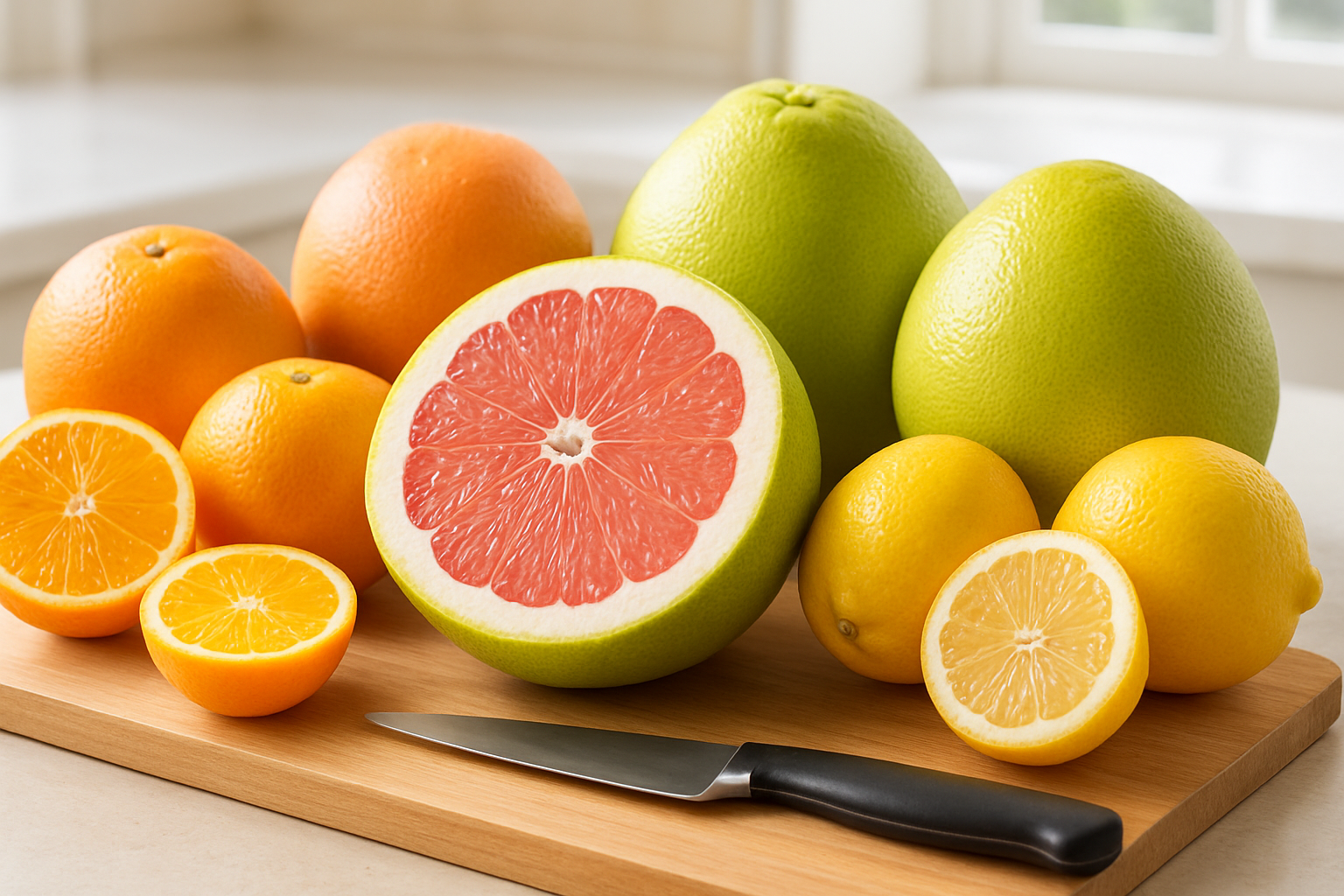
Pomelo stands out as a true citrus superstar that deserves a spot on your grocery list. This large, sweet fruit packs impressive amounts of vitamin C, fiber, and antioxidants while offering a unique flavor that's less tart than grapefruit but more complex than oranges. When you know how to pick a ripe pomelo and prepare it properly, you'll unlock endless possibilities for adding this nutritious fruit to your meals and snacks.
Don't let pomelo's intimidating size fool you into walking past it at the store. Give this amazing citrus fruit a try and see how it compares to your usual orange or grapefruit routine. Your taste buds and your body will thank you for branching out and discovering what might just become your new favorite healthy snack.


.png)
Comments
Post a Comment