Fruits for Better Digestion
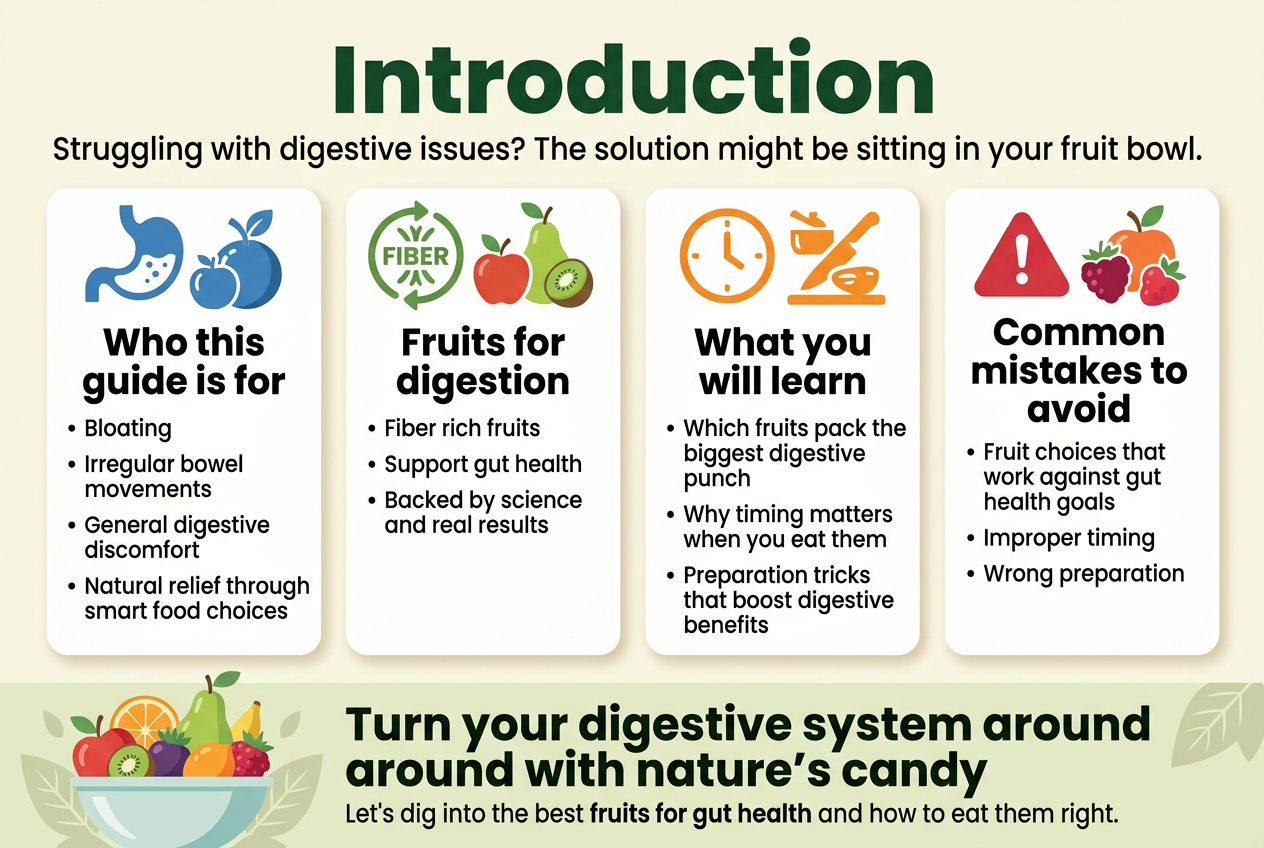
Struggling with digestive issues? The solution might be sitting in your fruit bowl.
This guide is for anyone dealing with bloating, irregular bowel movements, or general digestive discomfort who wants natural relief through smart food choices. We'll explore how fruits for digestion can become your gut's best friend, backed by science and real results.
You'll discover which fiber rich fruits pack the biggest digestive punch and why timing matters when you eat them. We'll also cover the preparation tricks that boost your fruits' digestive benefits and reveal common fruit consumption mistakes that might be working against your gut health goals.
Ready to turn your digestive system around with nature's candy? Let's dig into the best fruits for gut health and how to eat them right.
How Fiber-Rich Fruits Transform Your Digestive Health
Boost Natural Bowel Movement Regularity
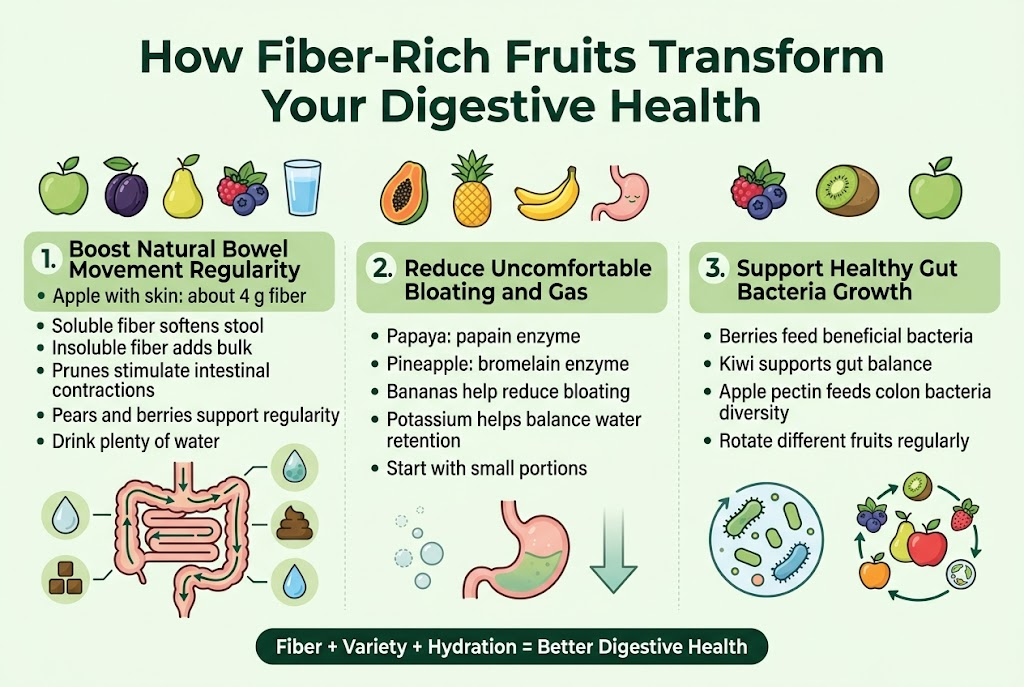
Fiber rich fruits act as nature's broom for your digestive system, sweeping waste through your intestines with remarkable efficiency. When you eat an apple with its skin on, you're getting about 4 grams of soluble and insoluble fiber that works together to create the perfect consistency for healthy bowel movements. The soluble fiber absorbs water and forms a gel-like substance that softens stool, while insoluble fiber adds bulk and helps everything move along smoothly.
Prunes deserve special recognition as digestive power fruits - they contain both fiber and natural compounds called phenolic acids that stimulate intestinal contractions. Just three to four prunes daily can significantly improve bowel movement frequency within a week. Pears, with their high pectin content, and berries packed with fiber create similar benefits without the concentrated effect of prunes.
The key lies in consistency. Your digestive system thrives on routine, so eating fruits for digestion at regular intervals trains your body to expect and process fiber efficiently. Water intake becomes crucial here - fiber needs adequate hydration to work properly, so drink plenty of water when increasing your fruit consumption.
Reduce Uncomfortable Bloating and Gas
Many people avoid fruits improve digestion because they fear gas and bloating, but the right approach actually reduces these uncomfortable symptoms. The secret is understanding which fruits work best for your individual system and how to introduce them gradually.
Papaya contains powerful digestive enzymes called papain that break down proteins and reduce the fermentation process that causes gas. Pineapple offers similar benefits with bromelain, an enzyme that helps your stomach process food more efficiently. These best fruits for gut health work as natural digestive aids, reducing the workload on your digestive system.
Bananas deserve special mention for their unique ability to reduce bloating. They contain potassium, which helps regulate sodium levels and reduces water retention that contributes to that uncomfortable bloated feeling. The resistant starch in slightly green bananas feeds beneficial bacteria without causing the gas production associated with other fermentable fibers.
Start with smaller portions and gradually increase your intake. Your gut bacteria need time to adjust to increased fiber, and rushing the process often leads to temporary discomfort that discourages people from continuing their healthy habits.
Support Healthy Gut Bacteria Growth
Your gut microbiome thrives on the diverse nutrients found in digestive health fruits, creating a thriving ecosystem that supports overall wellness. Different fruits feed different bacterial strains, so variety becomes your best strategy for optimal gut health.
Berries stand out as exceptional prebiotic sources - the natural sugars and fiber in blueberries, strawberries, and raspberries selectively feed beneficial bacteria like Bifidobacterium and Lactobacillus. These bacteria produce short-chain fatty acids that strengthen your intestinal lining and improve nutrient absorption.
Kiwi fruits contain unique prebiotic properties that support the growth of beneficial bacteria while inhibiting harmful strains. Research shows that eating two kiwis daily can significantly improve the balance of gut bacteria within just two weeks. The combination of fiber, vitamins, and natural enzymes creates an ideal environment for microbial diversity.
Apples provide pectin, a special type of fiber that acts as food for beneficial bacteria in your colon. The bacteria break down pectin into beneficial compounds that reduce inflammation and strengthen your immune system. Eating apples with the skin maximizes these benefits, as most of the pectin concentrates just beneath the surface.
Creating a rotation of different fruits ensures you're feeding various bacterial strains and maintaining the diversity your gut needs for optimal function.
Top Digestive Power Fruits You Should Eat Daily
Papaya for Gentle Stomach Relief
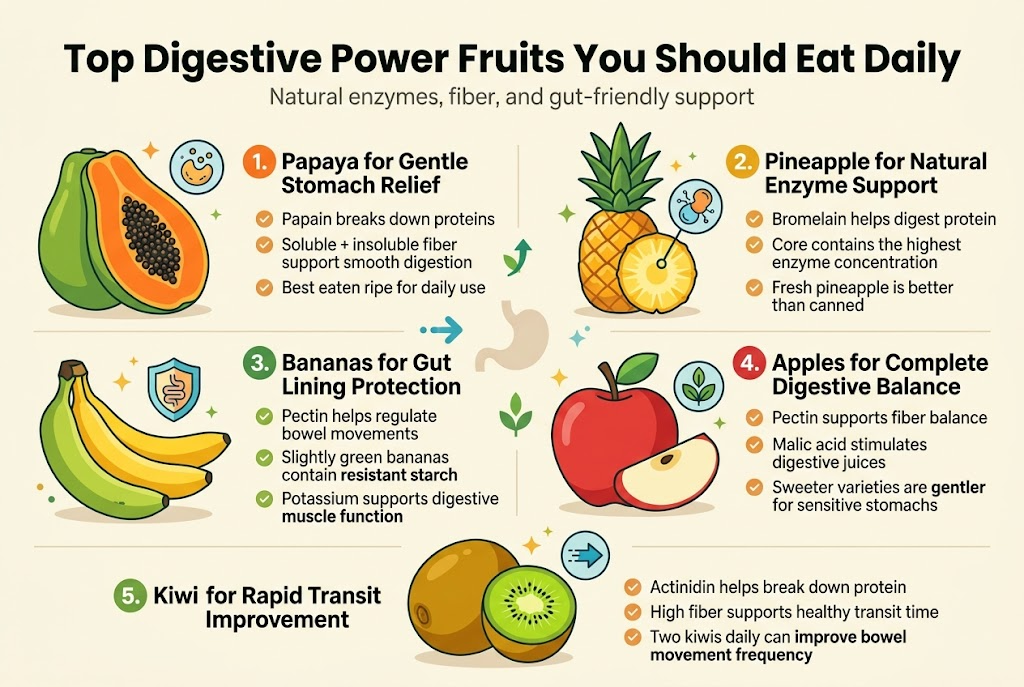
Papaya stands as one of nature's most powerful digestive aids, packed with the enzyme papain that breaks down proteins with remarkable efficiency. This tropical fruit works like a natural digestive supplement, helping your stomach process meals without the uncomfortable bloating or heaviness that often follows protein-rich foods.
The soft, orange flesh contains both soluble and insoluble fiber, creating the perfect combination for smooth digestive function. Soluble fiber feeds beneficial gut bacteria, while insoluble fiber adds bulk to stool and promotes regular bowel movements. People dealing with acid reflux or stomach sensitivity often find papaya provides gentle relief without irritation.
Fresh papaya delivers maximum digestive benefits when eaten ripe. The fruit should yield slightly to pressure and have a sweet, tropical aroma. Green papaya contains higher concentrations of enzymes but can be harsh on sensitive stomachs, making ripe papaya the better choice for daily consumption.
Pineapple for Natural Enzyme Support
Pineapple brings bromelain to your digestive system – a powerful enzyme complex that specifically targets protein breakdown. This makes pineapple particularly valuable after meals containing meat, fish, or dairy products. Bromelain doesn't just help digestion; it also reduces inflammation throughout the digestive tract.
The core of the pineapple contains the highest concentration of bromelain, though many people discard this fibrous part. Smart digestive health enthusiasts blend the core into smoothies or juice it to capture maximum enzyme power. Fresh pineapple always trumps canned varieties, as heat processing destroys most of the beneficial enzymes.
Eating pineapple between meals can actually prepare your digestive system for the next food intake. The natural acids and enzymes create an optimal environment for nutrient absorption while supporting overall gut health.
Bananas for Gut Lining Protection
Bananas offer unique digestive benefits that go beyond their gentle nature. These fruits contain pectin, a special type of fiber that helps regulate bowel movements and feeds beneficial gut bacteria. The natural sugars in bananas provide quick energy for digestive processes without causing blood sugar spikes.
Resistant starch in slightly green bananas acts as a prebiotic, nourishing the good bacteria in your colon. As bananas ripen, this resistant starch converts to simple sugars, making fully ripe bananas easier to digest for people with sensitive stomachs. The potassium content helps maintain proper muscle function in the digestive tract.
Bananas also contain compounds that stimulate the production of protective mucus in the stomach lining. This natural coating helps shield your stomach from acid and reduces the risk of ulcers or gastritis.
Apples for Complete Digestive Balance
Apples provide comprehensive digestive support through their unique fiber profile and natural compounds. The pectin in apple skin acts as a gentle detoxifier, binding to toxins and helping remove them from your system. Apple flesh contains both types of fiber needed for optimal digestive health.
The natural malic acid in apples stimulates digestive juices, preparing your stomach for efficient food breakdown. This makes apples excellent pre-meal snacks that can improve overall digestion. The quercetin and other antioxidants in apples also reduce inflammation in the digestive tract.
Different apple varieties offer varying digestive benefits. Granny Smith apples contain higher levels of beneficial compounds but may be too acidic for sensitive stomachs. Sweeter varieties like Gala or Fuji provide gentler digestive support while still delivering substantial fiber content.
Kiwi for Rapid Transit Improvement
Kiwi fruit excels at promoting healthy digestive transit time – the speed at which food moves through your system. The unique enzyme actinidin found in kiwi helps break down proteins while the high fiber content keeps things moving smoothly through your intestines.
Studies show that eating two kiwis daily can significantly improve bowel movement frequency and reduce digestive discomfort. The small black seeds provide additional fiber and healthy fats that support overall gut health. Kiwi's high vitamin C content also supports the immune system in your gut.
The fuzzy skin of kiwi is actually edible and contains concentrated nutrients, though many people prefer to peel it. Either way, kiwi delivers impressive digestive power in a small package. The fruit's natural enzymes remain active even after eating, continuing to support digestion for hours.
Best Times to Consume Fruits for Maximum Digestive Benefits
Morning Fruits for Metabolism Kickstart
Your digestive system works like a well-oiled machine when you fuel it properly from the moment you wake up. Starting your day with fruits for digestion gives your metabolism the perfect jumpstart it needs. During the overnight fast, your body has been working to repair and detoxify, leaving your digestive tract ready for gentle, natural fuel.
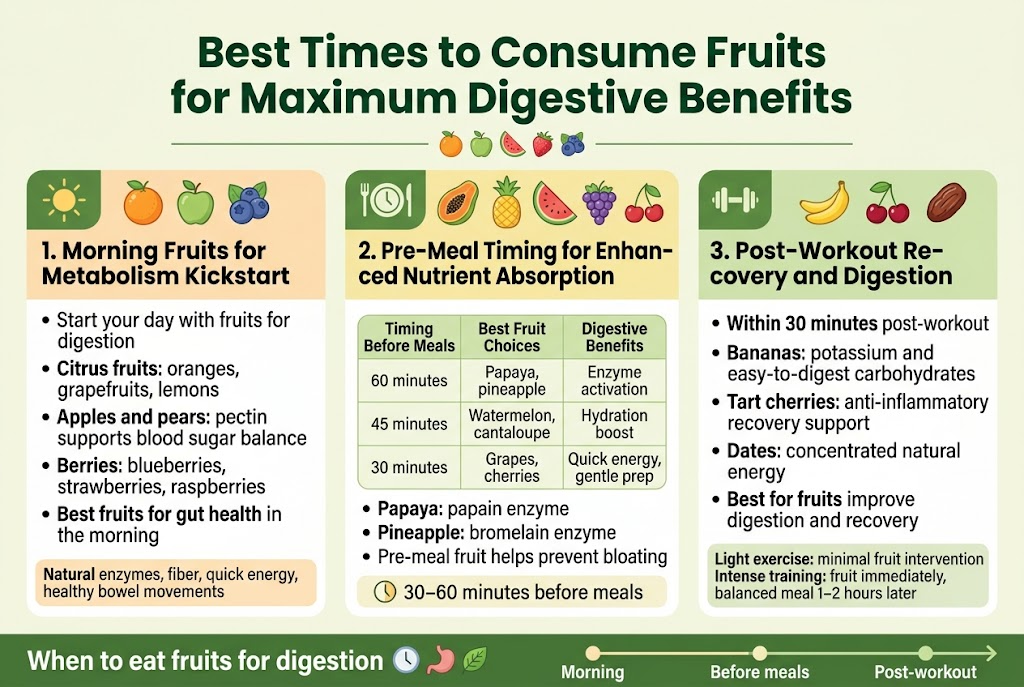
Citrus fruits shine brightest in the morning hours. Oranges, grapefruits, and lemons contain natural enzymes that stimulate digestive juices and help your body transition from its fasted state. The natural sugars provide quick energy while the fiber rich fruits content supports healthy bowel movements throughout the day.
Apples and pears make excellent morning choices because their pectin content helps regulate blood sugar levels and promotes beneficial gut bacteria growth. The saying "an apple a day keeps the doctor away" holds special truth when consumed in the morning, as this timing maximizes the digestive benefits of fruits.
Berries pack a powerful morning punch with their antioxidants and fiber. Blueberries, strawberries, and raspberries are among the best fruits for gut health when eaten early, as they help reduce inflammation in the digestive tract while providing sustained energy.
Pre-Meal Timing for Enhanced Nutrient Absorption
The timing of fruit consumption before meals can make or break your digestive success. Eating digestive health fruits 30-60 minutes before your main meals creates optimal conditions for nutrient absorption and prevents common digestive discomfort.
Pre-meal fruits act as digestive primers, stimulating the production of digestive enzymes and preparing your stomach for the incoming food. This strategic timing allows the natural fruit sugars to be absorbed quickly without interference from other foods, preventing fermentation and bloating.
| Timing Before Meals | Best Fruit Choices | Digestive Benefits |
|---|---|---|
| 60 minutes | Papaya, pineapple | Enzyme activation |
| 45 minutes | Watermelon, cantaloupe | Hydration boost |
| 30 minutes | Grapes, cherries | Quick energy, gentle prep |
Papaya stands out as the ultimate pre-meal fruit thanks to its papain enzyme content, which breaks down proteins and eases digestion. Pineapple contains bromelain, another powerful digestive enzyme that works particularly well with protein-heavy meals.
Water-rich fruits like watermelon and cantaloupe consumed before meals help with hydration and create a feeling of gentle fullness, preventing overeating while supporting proper digestion.
Post-Workout Recovery and Digestion
Your body's digestive needs shift dramatically after exercise, and choosing the right digestive power fruits during this window can enhance both recovery and gut health. Within 30 minutes post-workout, your muscles are primed for nutrient uptake, and your digestive system is ready for easily absorbed fuel.
Bananas reign supreme in post-workout nutrition. Their natural potassium helps prevent muscle cramps while their easily digestible carbohydrates replenish glycogen stores without overwhelming your digestive system. The fiber content supports healthy gut bacteria, making bananas perfect for when fruits improve digestion and recovery simultaneously.
Tart cherries offer unique post-exercise benefits with their anti-inflammatory properties. They help reduce exercise-induced inflammation while providing natural melatonin for better recovery sleep. The anthocyanins in cherries support digestive health by promoting beneficial bacteria growth.
Dates provide concentrated natural energy that your body can quickly convert to fuel for muscle repair. Their fiber content supports digestive regularity, especially important after intense workouts that can sometimes disrupt normal digestive patterns.
When to eat fruits for digestion after exercise depends on workout intensity. Light exercise requires minimal fruit intervention, while intense training sessions benefit from immediate fruit consumption followed by a balanced meal 1-2 hours later. This timing ensures optimal nutrient absorption while supporting both athletic performance and digestive wellness.
Proper Fruit Preparation Methods That Enhance Digestive Properties
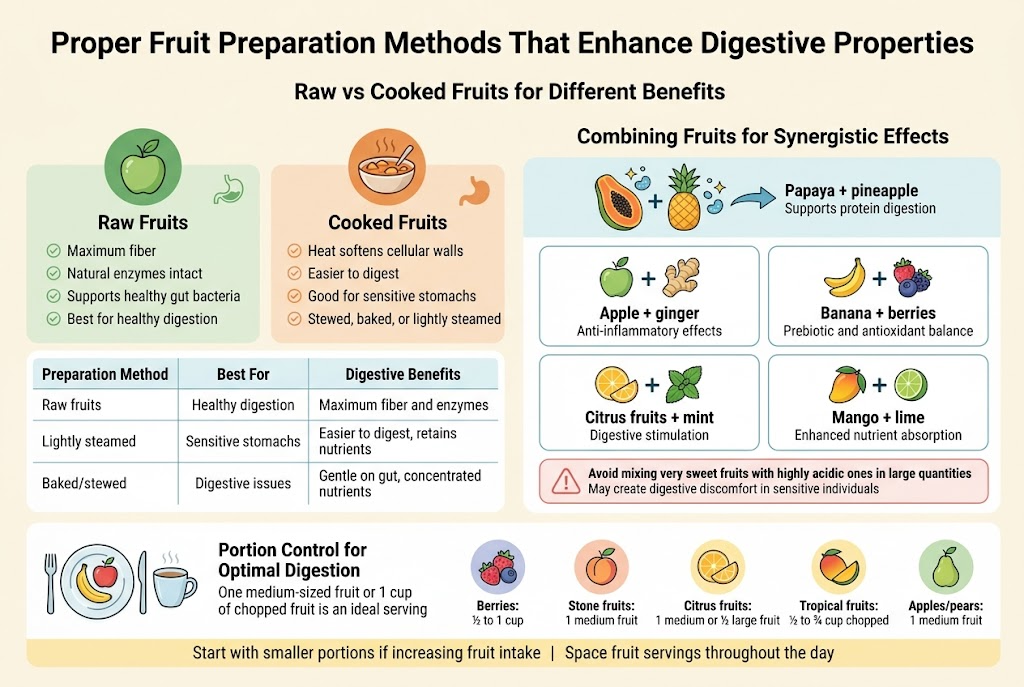
Raw vs Cooked Fruits for Different Benefits
Raw fruits deliver maximum fiber rich fruits benefits, keeping their natural enzymes intact for optimal digestive support. When you bite into a fresh apple or pear, these enzymes help break down food particles and promote healthy gut bacteria growth. The fiber content remains at peak levels, creating the perfect environment for smooth digestion.
Cooked fruits serve a different purpose in your digestive wellness journey. Heat breaks down tough cellular walls, making nutrients more accessible for people with sensitive stomachs or compromised digestive systems. Stewed apples, baked pears, and gently simmered berries become easier to digest while maintaining many of their beneficial properties.
| Preparation Method | Best For | Digestive Benefits |
|---|---|---|
| Raw fruits | Healthy digestion | Maximum fiber and enzymes |
| Lightly steamed | Sensitive stomachs | Easier to digest, retains nutrients |
| Baked/stewed | Digestive issues | Gentle on gut, concentrated nutrients |
Combining Fruits for Synergistic Effects
Smart fruit consumption involves pairing complementary fruits to maximize digestive benefits. Combining papaya with pineapple creates a powerful enzyme blend that enhances protein digestion. The bromelain in pineapple works alongside papain in papaya to break down complex proteins more effectively.
Mixing high-fiber fruits like apples with probiotic-rich options such as kiwi creates an ideal environment for beneficial gut bacteria. This combination supports both immediate digestion and long-term gut health maintenance.
Best fruits for gut health combinations include:
-
Apple + ginger for anti-inflammatory effects
-
Banana + berries for prebiotic and antioxidant balance
-
Citrus fruits + mint for digestive stimulation
-
Mango + lime for enhanced nutrient absorption
Avoid mixing very sweet fruits with highly acidic ones in large quantities, as this can create digestive discomfort in sensitive individuals.
Portion Control for Optimal Digestion
Your digestive system processes fruits for digestion most effectively when you stick to appropriate serving sizes. One medium-sized fruit or a cup of chopped fruit represents an ideal single serving that won't overwhelm your digestive capacity.
Eating too much fruit at once can trigger digestive distress, even with the healthiest options. Your stomach needs time to process the natural sugars and fiber content properly. Space fruit servings throughout the day rather than consuming large amounts in one sitting.
Digestive power fruits work best when consumed in these portions:
-
Berries: ½ to 1 cup per serving
-
Stone fruits: 1 medium fruit
-
Citrus fruits: 1 medium or ½ large fruit
-
Tropical fruits: ½ to ¾ cup chopped
-
Apples/pears: 1 medium fruit
Start with smaller portions if you're increasing your fruit intake, allowing your digestive system to adapt gradually to higher fiber levels.
Common Fruit Consumption Mistakes That Harm Your Digestive System
Mixing Incompatible Fruits Together
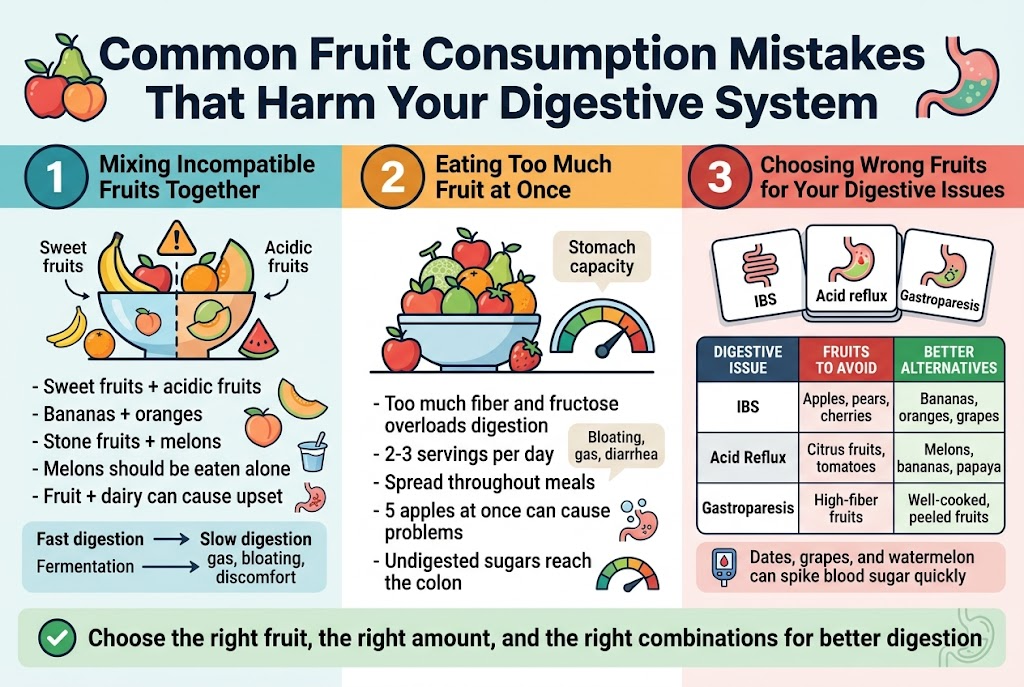
Combining certain fruits can spell disaster for your digestive system. Your stomach struggles when you mix sweet fruits like bananas with acidic ones like oranges because they require different enzymes and digestion times. Sweet fruits digest quickly, while acidic fruits take longer, causing the sweet ones to ferment in your stomach.
This fermentation creates gas, bloating, and discomfort that many people experience after fruit salads. Stone fruits like peaches and plums paired with melons create similar problems. Melons digest fastest and should always be eaten alone, at least 30 minutes before other foods.
The worst combination? Mixing fruits for digestion benefits with dairy products. That smoothie with yogurt, berries, and banana might taste amazing, but it's creating a digestive nightmare. The proteins in dairy clash with fruit acids, leading to poor nutrient absorption and stomach upset.
Eating Too Much Fruit at Once
Loading up on fiber rich fruits in one sitting overwhelms your digestive system. Your body can only process so much fructose at once, and excess amounts lead to bloating, gas, and diarrhea. Even healthy digestive health fruits become problematic when consumed in large quantities.
The magic number is 2-3 servings per day, spread throughout your meals. Eating five apples at once floods your system with fiber and natural sugars your gut can't handle efficiently. This fruit consumption mistake is common among people trying to eat healthier but actually creates more digestive problems.
Your small intestine has limited capacity for absorbing fructose. When you exceed this limit, undigested sugars reach your colon where bacteria ferment them, producing uncomfortable gas and cramping.
Choosing Wrong Fruits for Your Digestive Issues
Not all fruits improve digestion for everyone. If you have irritable bowel syndrome, high-FODMAP fruits like apples, pears, and cherries can trigger symptoms. These best fruits for gut health in general become problematic for sensitive digestive systems.
People with acid reflux should avoid citrus fruits and tomatoes, even though they're packed with nutrients. The high acid content worsens heartburn and stomach irritation. Similarly, those with gastroparesis need to skip high-fiber fruits that slow stomach emptying.
Diabetics often choose fruits thinking they're making healthy choices, but some fruits spike blood sugar rapidly. Dates, grapes, and watermelon have high glycemic indexes that can disrupt blood sugar balance and indirectly affect digestive health through inflammation.
| Digestive Issue | Fruits to Avoid | Better Alternatives |
|---|---|---|
| IBS | Apples, pears, cherries | Bananas, oranges, grapes |
| Acid Reflux | Citrus fruits, tomatoes | Melons, bananas, papaya |
| Gastroparesis | High-fiber fruits | Well-cooked, peeled fruits |
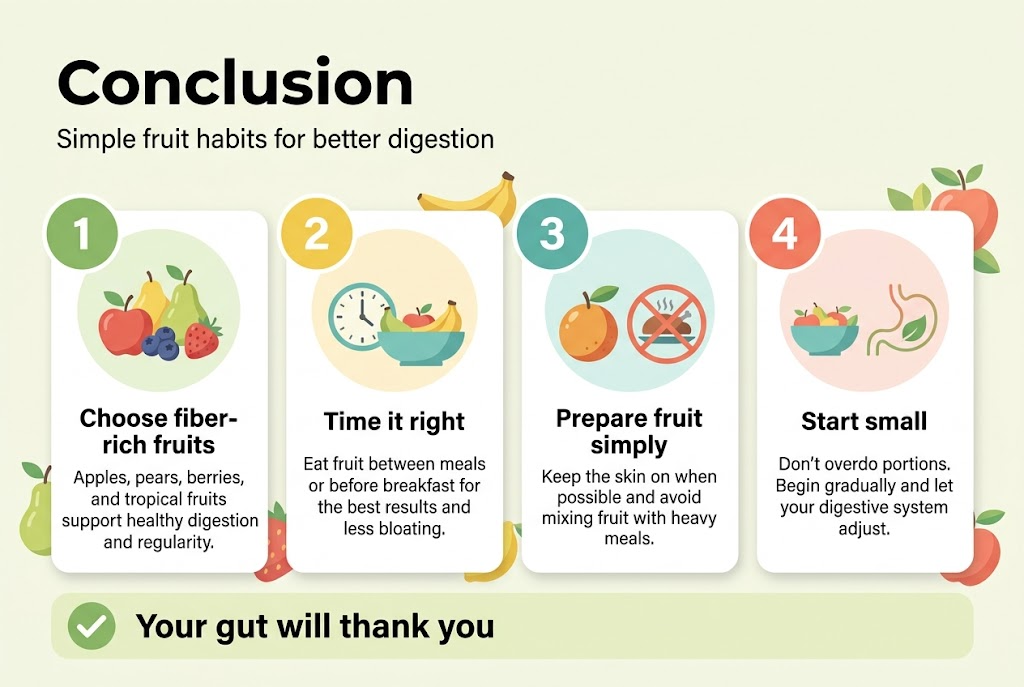
Adding fiber-rich fruits to your daily routine can make a real difference in how your digestive system functions. The fruits we've covered - from apples and pears to berries and tropical options - pack the nutrients your gut needs to stay healthy and regular. Timing matters too, so eating fruits between meals or before breakfast gives you the best results without causing bloating or discomfort.
The way you prepare and eat fruits is just as important as choosing the right ones. Keep the skin on when possible, avoid mixing fruits with heavy meals, and don't go overboard with portions. Start small if you're new to eating more fruit, and let your digestive system adjust gradually. Your gut will thank you for making these simple but powerful changes to support better digestion naturally.


Comments
Post a Comment