Fruits You Can Use for Natural Hair Care
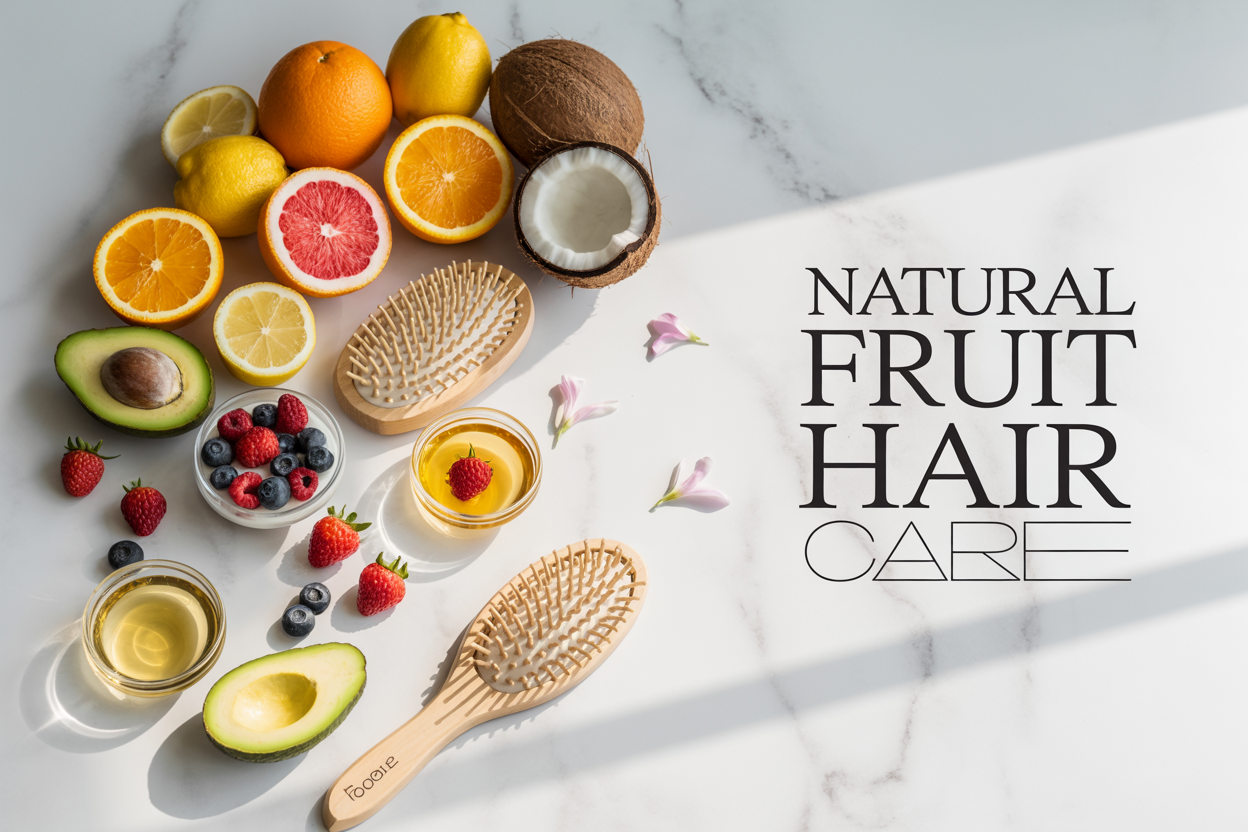
Your kitchen is packed with powerful natural hair care fruits that can transform your hair routine without breaking the bank. If you're tired of expensive salon treatments and chemical-heavy products, these fruit-based solutions offer a gentle, effective alternative that works for all hair types.
This guide is perfect for anyone wanting to try organic hair care with fruits – from busy parents looking for budget-friendly options to natural beauty enthusiasts seeking chemical-free alternatives.
We'll explore how citrus fruits can strengthen your hair follicles with their vitamin C punch, discover which tropical fruits deliver deep moisture for dry, damaged strands, and learn simple application methods for homemade fruit hair treatments you can whip up in minutes. You'll also find out which berries boost hair thickness and how stone fruits can solve stubborn scalp issues naturally.
Top Citrus Fruits for Strengthening Hair Follicles
Lemon juice for removing buildup and adding shine
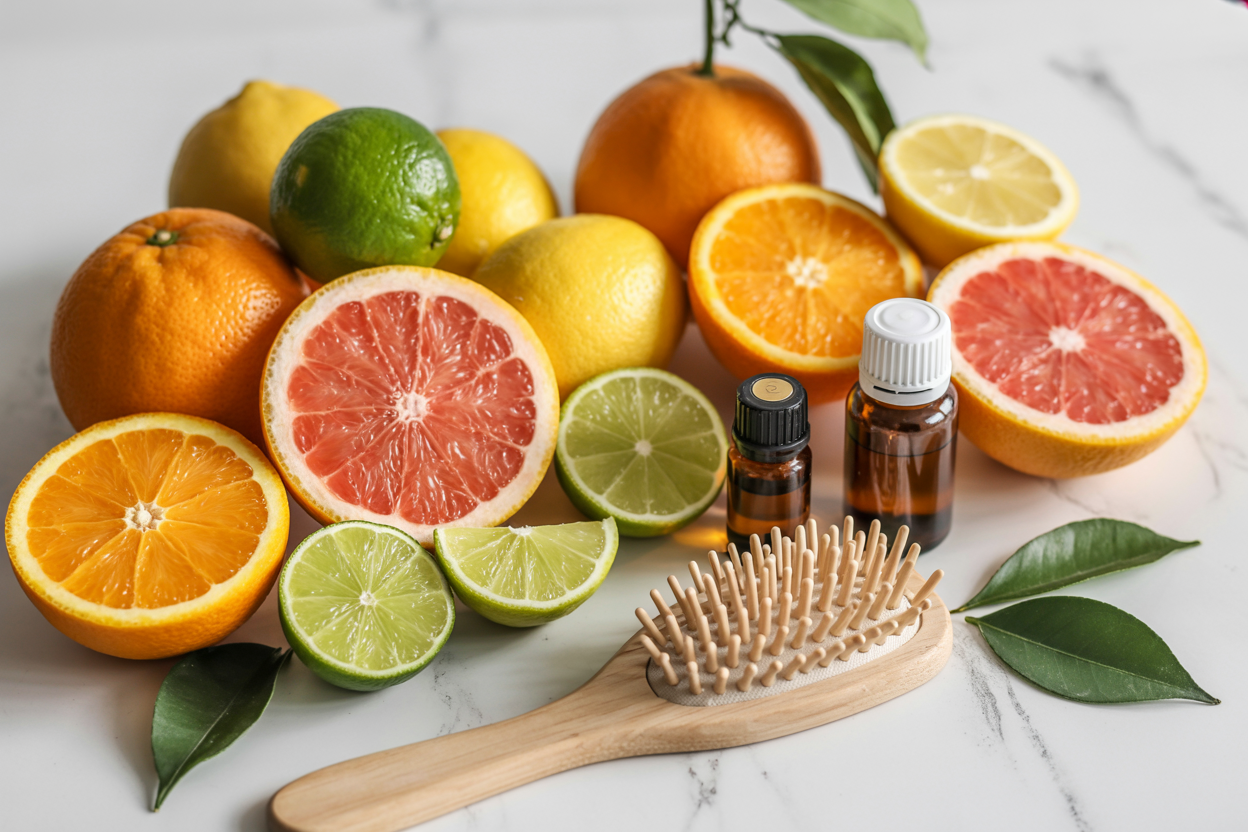
Lemon juice stands as one of the most effective natural hair care fruits for cleansing and revitalizing your hair. The natural citric acid in lemons works like a gentle clarifying agent, breaking down product buildup, excess oils, and environmental pollutants that weigh your hair down. When you massage diluted lemon juice into your scalp, it dissolves stubborn residue that regular shampoo might miss.
The acidic properties help seal your hair cuticles, creating that mirror-like shine you see in professional salon treatments. Mix two tablespoons of fresh lemon juice with a cup of water, and use this solution as a final rinse after shampooing. Your hair will feel lighter and look noticeably shinier within just one treatment.
Lemon juice also balances your scalp's pH levels, which can reduce oiliness and create a healthier environment for hair growth. The vitamin C content strengthens hair follicles from the root, potentially reducing hair breakage and promoting stronger strands over time.
Orange peels for deep conditioning treatments
Orange peels contain concentrated nutrients that make them perfect for DIY fruit hair masks. The natural oils found in orange zest provide intense moisture while the vitamin C content helps repair damaged hair cuticles. These peels are rich in pectin, a natural conditioning agent that smooths rough hair and adds elasticity.
Create a nourishing treatment by grinding dried orange peels into a fine powder and mixing it with yogurt or honey. This combination penetrates deeply into your hair shaft, delivering vitamins A, B, and C directly where your hair needs them most. The natural oils in orange peels also help tame frizz and add a subtle, healthy fragrance to your hair.
Orange peel treatments work especially well for dry or chemically-treated hair that needs extra hydration. Apply the mask to damp hair, focusing on mid-lengths and ends, then leave it on for 20-30 minutes before rinsing thoroughly.
Grapefruit extract for scalp circulation boost
Grapefruit extract energizes your scalp like few other citrus fruits for hair can. The natural enzymes and antioxidants in grapefruit stimulate blood flow to hair follicles, which can promote healthier hair growth patterns. When circulation improves around your hair roots, more nutrients reach the follicles, creating an optimal environment for strong, healthy hair development.
The antibacterial properties in grapefruit extract help maintain a clean, balanced scalp environment. This is particularly beneficial if you struggle with scalp irritation or minor dandruff issues. The natural astringent qualities help control excess oil production without over-drying your scalp.
Mix a few drops of grapefruit essential oil with a carrier oil like jojoba or coconut oil, then massage this blend into your scalp using circular motions. The tingling sensation you might feel indicates improved blood circulation. Regular use of grapefruit-based scalp treatments can lead to fuller-looking hair and a healthier scalp overall.
Tropical Fruits That Nourish and Moisturize Hair
Coconut meat for intense hydration therapy
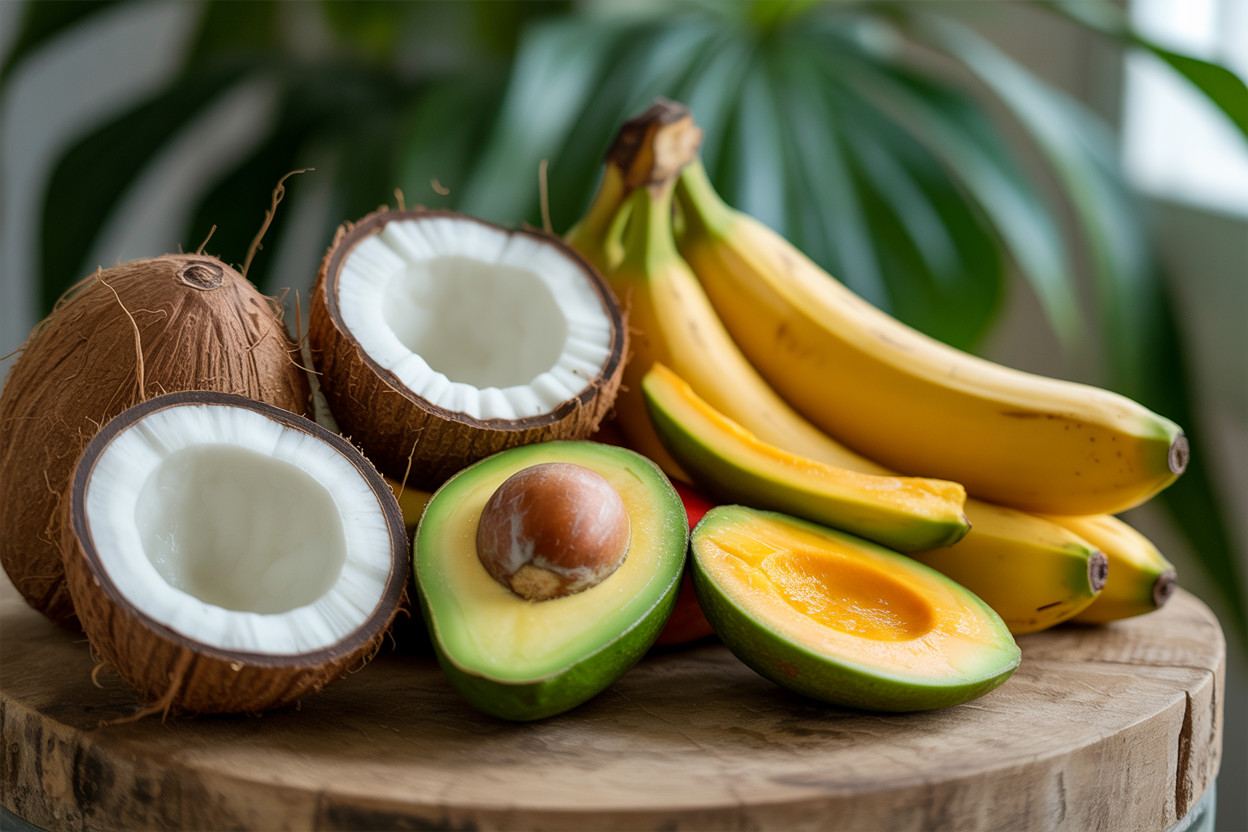
Fresh coconut meat works like a natural moisturizer for your hair, packed with healthy fats and proteins that penetrate deep into each strand. Unlike coconut oil that sits on top, the meat contains natural enzymes and vitamins that actually repair damage from the inside out. When you blend fresh coconut meat into a creamy paste, you create one of nature's most powerful hydrating treatments.
The lauric acid in coconut meat has a unique molecular structure that allows it to slip past your hair's protective cuticle layer. This means real nourishment reaches the cortex where your hair's strength lives. People with chemically processed or heat-damaged hair often see dramatic improvements after just a few coconut meat treatments.
To make this tropical fruits hair treatment, scrape out the meat from one fresh coconut and blend it with a splash of water until smooth. Apply this paste from mid-length to ends, avoiding your scalp. Cover with a shower cap and let it work for 30-45 minutes before rinsing with cool water.
Avocado masks for damaged hair repair
Avocados bring serious repair power to your hair care routine thanks to their unique combination of vitamins E, D, and A, plus essential fatty acids. These green powerhouses contain natural proteins that fill in microscopic gaps along damaged hair shafts, essentially patching up years of styling abuse.
The monounsaturated fats in avocado create a protective film around each hair strand, locking in moisture while preventing future damage. This makes avocado especially valuable for people with color-treated, permed, or frequently heat-styled hair. The vitamin E acts like an antioxidant shield, protecting your hair from environmental damage.
Create your DIY fruit hair masks by mashing one ripe avocado with a tablespoon of olive oil and a squeeze of fresh lemon juice. The lemon helps the nutrients penetrate better while adding shine. Apply this mixture generously, focusing on damaged areas, and leave on for 20-30 minutes. Rinse thoroughly with lukewarm water to avoid cooking the proteins.
Banana treatments for softness and manageability
Bananas transform unruly, tangled hair into silky smooth strands thanks to their natural sugars and potassium content. The fruit's creamy texture makes it perfect for coating every strand evenly, while its natural pH helps seal your hair's cuticles for maximum shine and softness.
The potassium in bananas strengthens hair fibers and reduces breakage, while natural sugars provide instant moisture. Bananas also contain tryptophan, an amino acid that supports healthy hair growth from the follicle level. This makes banana treatments perfect for anyone dealing with brittle, breaking hair.
For best results with natural hair care fruits, use overripe bananas since they're softer and blend more easily. Mash two ripe bananas until completely smooth (no lumps!), then mix with a tablespoon of honey and a few drops of vanilla extract. Apply section by section, combing through to ensure even coverage. Leave on for 25 minutes, then rinse with cool water and shampoo as usual.
Papaya enzymes for gentle exfoliation
Papaya offers a gentle yet effective way to remove buildup from your scalp and hair without harsh chemicals. The fruit contains papain, a natural enzyme that breaks down dead skin cells and product residue that can clog follicles and make hair look dull. This natural exfoliation process helps create the ideal environment for healthy hair growth.
Unlike commercial clarifying shampoos that can strip your hair, papaya's enzymes work selectively, removing only what shouldn't be there while leaving natural oils intact. The fruit also contains vitamins A and C, which boost scalp circulation and support collagen production around hair follicles.
To harness these fruit hair remedies, blend half a ripe papaya with two tablespoons of plain yogurt. The yogurt adds probiotics that support scalp health while helping the mixture stick better. Massage this blend into your scalp and work through your hair, then let it sit for 15-20 minutes. Rinse well and follow with a light conditioner on the ends only.
Berry-Based Remedies for Hair Growth and Thickness
Strawberry Vitamin C Masks for Collagen Production
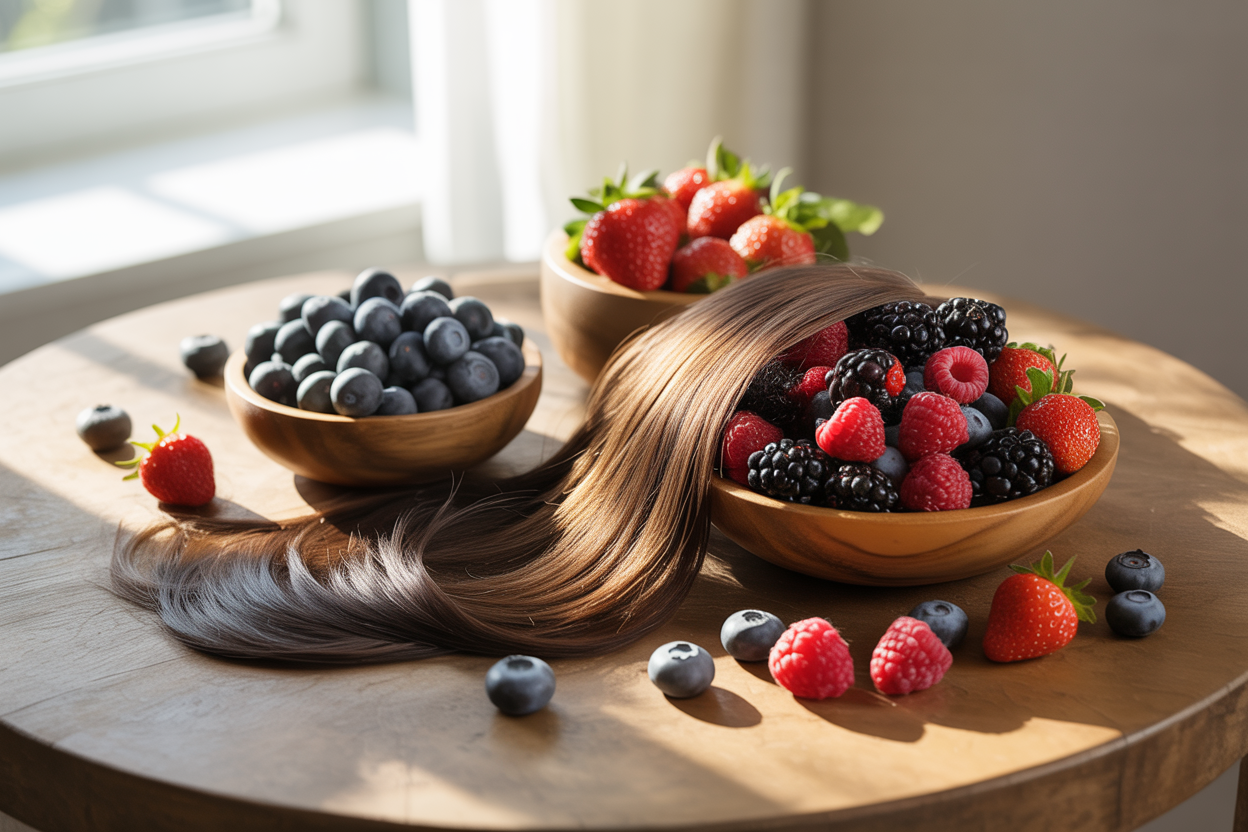
Strawberries pack an incredible punch when it comes to boosting hair growth through their high vitamin C content. These ruby-red berries contain more vitamin C per serving than most citrus fruits, making them perfect for DIY fruit hair masks that stimulate collagen production in your scalp.
When you apply mashed strawberries directly to your hair and scalp, the vitamin C works to strengthen blood vessel walls in hair follicles, improving circulation and nutrient delivery. This enhanced blood flow creates the perfect environment for stronger, faster-growing hair. The natural acids in strawberries also help remove product buildup and dead skin cells that can clog follicles.
Create a simple strawberry mask by blending 6-8 fresh strawberries with 2 tablespoons of honey and 1 tablespoon of coconut oil. Apply this mixture from roots to tips, leave for 20 minutes, then rinse thoroughly. The combination provides both the collagen-boosting benefits and deep moisturization your hair craves.
Blueberry Antioxidants for Preventing Hair Loss
Blueberries stand out among berries for hair thickness due to their exceptional antioxidant profile. These tiny powerhouses contain anthocyanins and vitamin E, which protect hair follicles from damage caused by free radicals and environmental stressors.
Regular use of blueberry treatments can help prevent premature hair loss by maintaining healthy follicle function. The antioxidants work to improve blood circulation in the scalp while protecting existing hair strands from becoming brittle and breaking off. Blueberries also contain vitamin B6 and folate, essential nutrients that support healthy hair growth cycles.
For an effective blueberry treatment, crush 1/2 cup of fresh blueberries and mix with 2 tablespoons of yogurt and 1 teaspoon of olive oil. This combination provides antioxidants, protein, and moisturizing properties. Massage the mixture into your scalp and hair, focusing on areas where you notice thinning. Leave for 15-20 minutes before washing out with a gentle shampoo.
Blackberry Treatments for Natural Color Enhancement
Blackberries offer unique benefits for those looking to enhance their natural hair color while promoting thickness. These dark berries contain natural pigments that can deepen brunette shades and add rich undertones to darker hair colors. The deep purple and black compounds in blackberries work as gentle, natural colorants without the harsh chemicals found in commercial dyes.
The vitamin K in blackberries strengthens hair strands, while the natural sugars provide moisture and shine. Blackberry treatments are particularly effective for adding depth to brown and black hair, creating subtle highlights that catch the light beautifully.
To make a blackberry color-enhancing treatment, simmer 1 cup of blackberries in 2 cups of water for 15 minutes, then strain the liquid. Mix this concentrated blackberry juice with 3 tablespoons of aloe vera gel. Apply to clean, damp hair and leave for 30-45 minutes. The longer you leave it, the more subtle color enhancement you'll achieve. This treatment can be used weekly to gradually build up natural-looking color depth while nourishing your hair with antioxidants and vitamins that support overall hair health.
Stone Fruits for Scalp Health and Dandruff Control
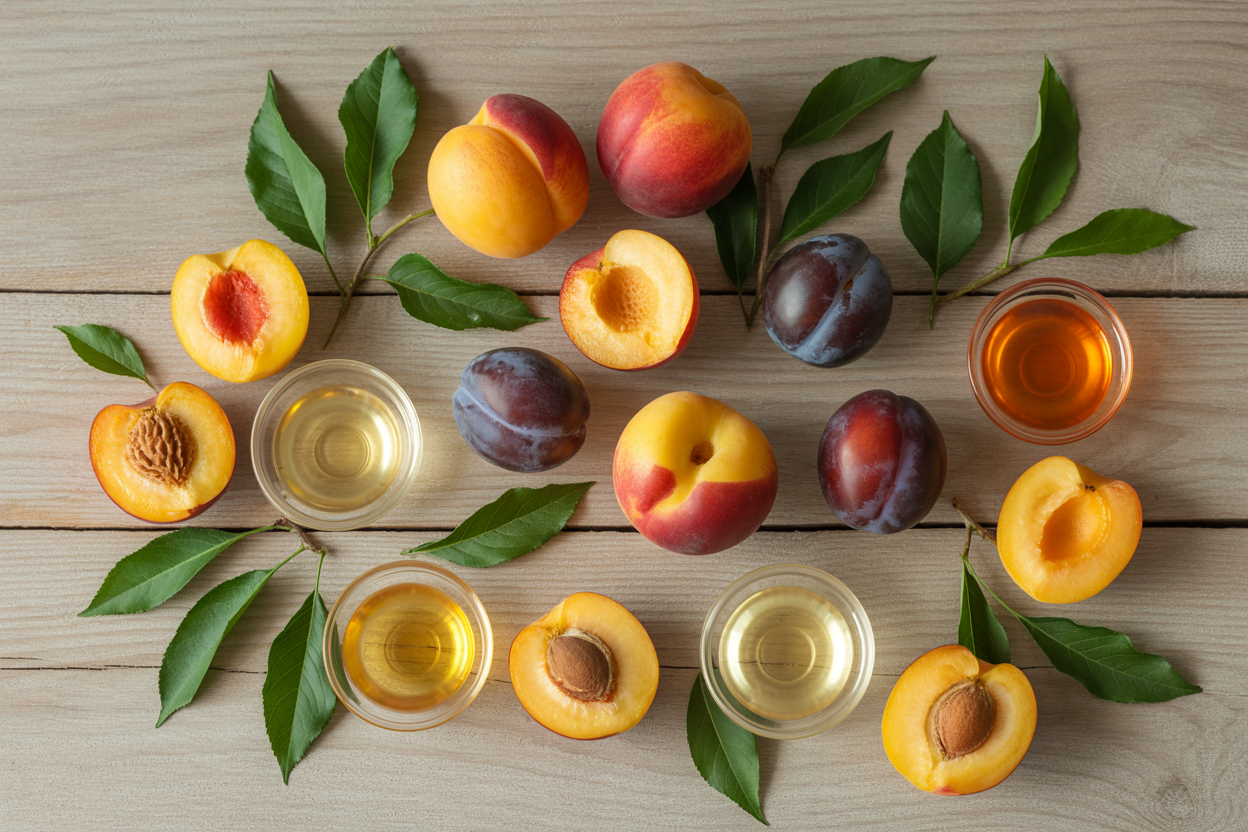
Peach Oil Extracts for Soothing Irritated Scalp
Peach kernel oil works wonders for calming inflamed and sensitive scalps. Rich in vitamins A and E, this gentle oil penetrates deeply into the skin without leaving a greasy residue. The natural anti-inflammatory compounds in peach oil help reduce redness and itching that often accompanies scalp irritation.
You can extract peach oil at home by crushing fresh peach pits and steeping them in a carrier oil like jojoba for several weeks. Alternatively, cold-pressed peach kernel oil is readily available at health food stores. Massage a few drops directly into your scalp before bedtime, focusing on problem areas. The lightweight texture makes it perfect for daily use without weighing down your hair.
Apricot Treatments for Reducing Flakiness
Apricots contain natural fruit acids that gently exfoliate dead skin cells while providing essential moisture to dry scalps. The beta-carotene in apricots converts to vitamin A, which promotes healthy cell turnover and reduces the buildup that leads to flaking.
Create an effective apricot scalp treatment by blending fresh apricots into a smooth paste. Mix with a tablespoon of honey and apply directly to your scalp. Leave on for 20 minutes before rinsing with cool water. The natural enzymes break down stubborn flakes while the honey adds antibacterial properties. Use this treatment twice weekly for best results.
Cherry Juice for Anti-Inflammatory Benefits
Tart cherries pack powerful anthocyanins that combat scalp inflammation more effectively than many commercial treatments. These antioxidants reduce swelling and promote healthy blood circulation to hair follicles. Cherry juice also contains natural salicylates that provide pain relief for tender, inflamed areas.
Apply fresh cherry juice directly to clean scalp using a spray bottle or cotton pads. The natural sugars feed beneficial scalp bacteria while the acids balance pH levels. Leave the treatment on for 15 minutes before shampooing. Regular use helps prevent inflammatory conditions that can lead to hair loss and chronic dandruff.
Plum Masks for Balancing Scalp pH Levels
Plums naturally maintain an acidic pH that matches your scalp's protective barrier. When your scalp becomes too alkaline from harsh shampoos or environmental factors, plum treatments restore the ideal pH balance of 4.5-5.5. This balanced environment prevents harmful bacteria growth while supporting healthy hair follicle function.
Mash ripe plums with a fork and add a teaspoon of apple cider vinegar for enhanced pH-balancing power. Apply this mixture to damp hair, working it into the scalp with gentle circular motions. Cover with a shower cap and wait 30 minutes. The natural malic acid in plums dissolves product buildup while creating an environment where dandruff-causing fungi cannot thrive. Your scalp will feel refreshed and balanced after just one treatment.
Application Methods and DIY Fruit Hair Treatments
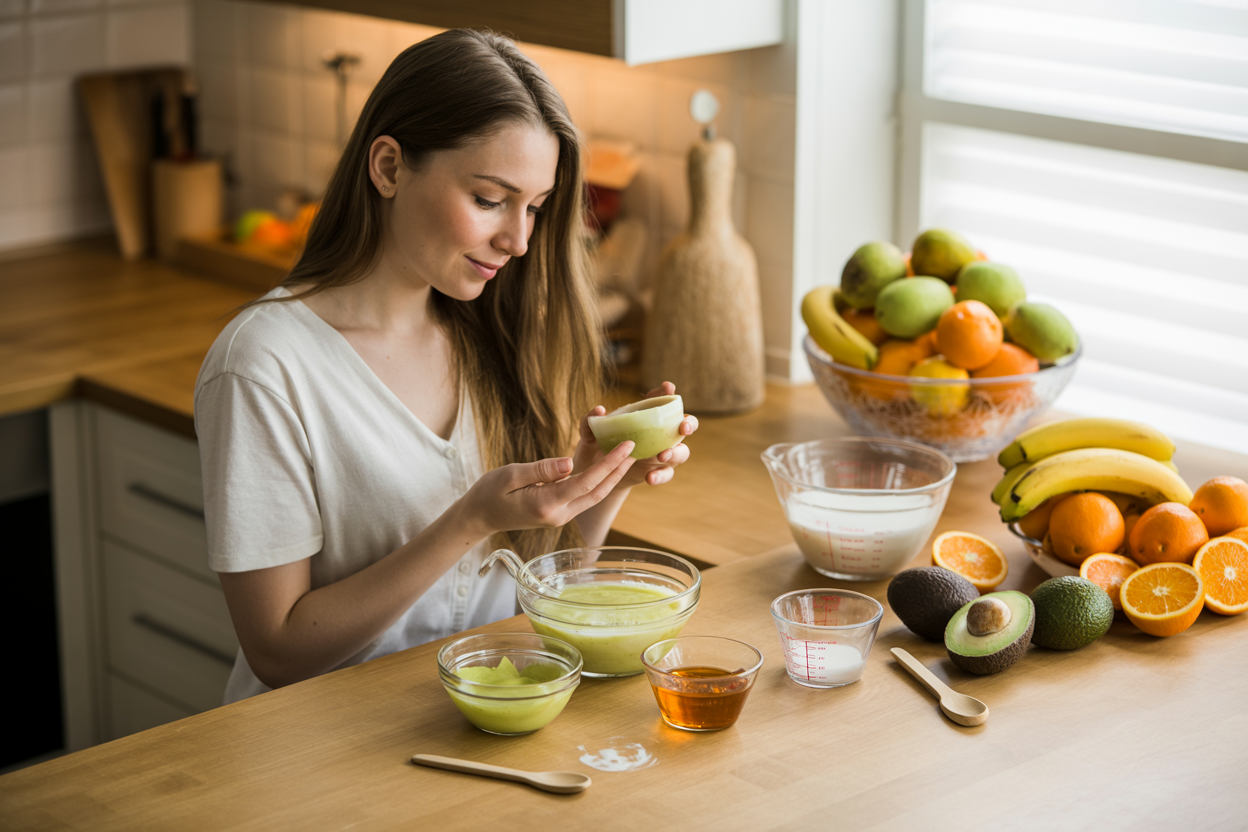
Simple fruit mask preparation techniques
Creating effective DIY fruit hair masks starts with selecting ripe, organic fruits that pack the most nutrients. Mash soft fruits like bananas, avocados, or papaya with a fork until smooth, ensuring no chunks remain that could tangle in your hair. For firmer fruits such as apples or pears, blend them with a small amount of water to create a consistent paste.
Fresh citrus fruits work differently - extract the juice and strain out pulp for lighter hair types, or keep some pulp for added exfoliation on oily scalps. Berries should be thoroughly mashed and strained to remove seeds that might cause hair damage. Always prepare masks fresh before each use, as natural fruit oxidizes quickly and loses potency.
When working with tropical fruits hair treatment ingredients like mangoes or pineapples, blend until completely smooth since these contain enzymes that break down proteins - you want controlled application, not aggressive processing. Test the consistency by applying a small amount to your palm; it should spread easily without dripping excessively.
Combining fruits with natural oils for enhanced results
Mixing fruits for hair growth with carrier oils creates powerful treatments that address multiple hair concerns simultaneously. Coconut oil pairs beautifully with tropical fruits, while argan oil complements citrus-based masks for damaged hair. Add one to two tablespoons of oil per cup of fruit pulp to maintain the right balance.
For dry, brittle hair, combine mashed avocado with jojoba oil and a few drops of sweet orange essential oil. This combination provides deep moisture while the citrus stimulates circulation. Oily hair benefits from clay-fruit combinations - mix strawberry puree with bentonite clay and a light oil like grapeseed.
| Fruit Base | Recommended Oil | Hair Type | Benefits |
|---|---|---|---|
| Banana | Coconut oil | Dry, damaged | Deep conditioning |
| Lemon juice | Olive oil | Oily, dandruff-prone | Clarifying, balancing |
| Berry mix | Argan oil | Thin, fine | Strengthening, volume |
| Papaya | Castor oil | All types | Growth stimulation |
Essential oils boost the effectiveness of homemade fruit hair treatments. Add 3-5 drops of rosemary oil to any fruit mask for improved circulation, or use tea tree oil with citrus fruits for scalp health.
Proper application timing and frequency guidelines
Apply organic hair care with fruits treatments to damp, freshly washed hair for optimal absorption. Section your hair into quarters and work the mask from mid-length to ends first, then massage any remaining product into your scalp using gentle circular motions. This prevents over-processing the delicate scalp area.
Timing varies by fruit type and hair condition. Gentle fruits like banana or melon can stay on for 20-30 minutes, while acidic citrus fruits for hair should be limited to 10-15 minutes to prevent over-drying. Berry-based treatments work best with 15-20 minute applications.
Natural hair care fruits treatments should be used 1-2 times per week maximum. Over-application can lead to protein overload or scalp irritation, especially with enzyme-rich fruits like pineapple or papaya. Monitor your hair's response and adjust frequency accordingly.
Always rinse thoroughly with cool water to seal the hair cuticle and remove all fruit residue. Follow with a gentle, sulfate-free shampoo if needed, then apply a light conditioner to lock in the treatment benefits. Schedule these intensive treatments for days when you have extra time, as rushing the process reduces their effectiveness.
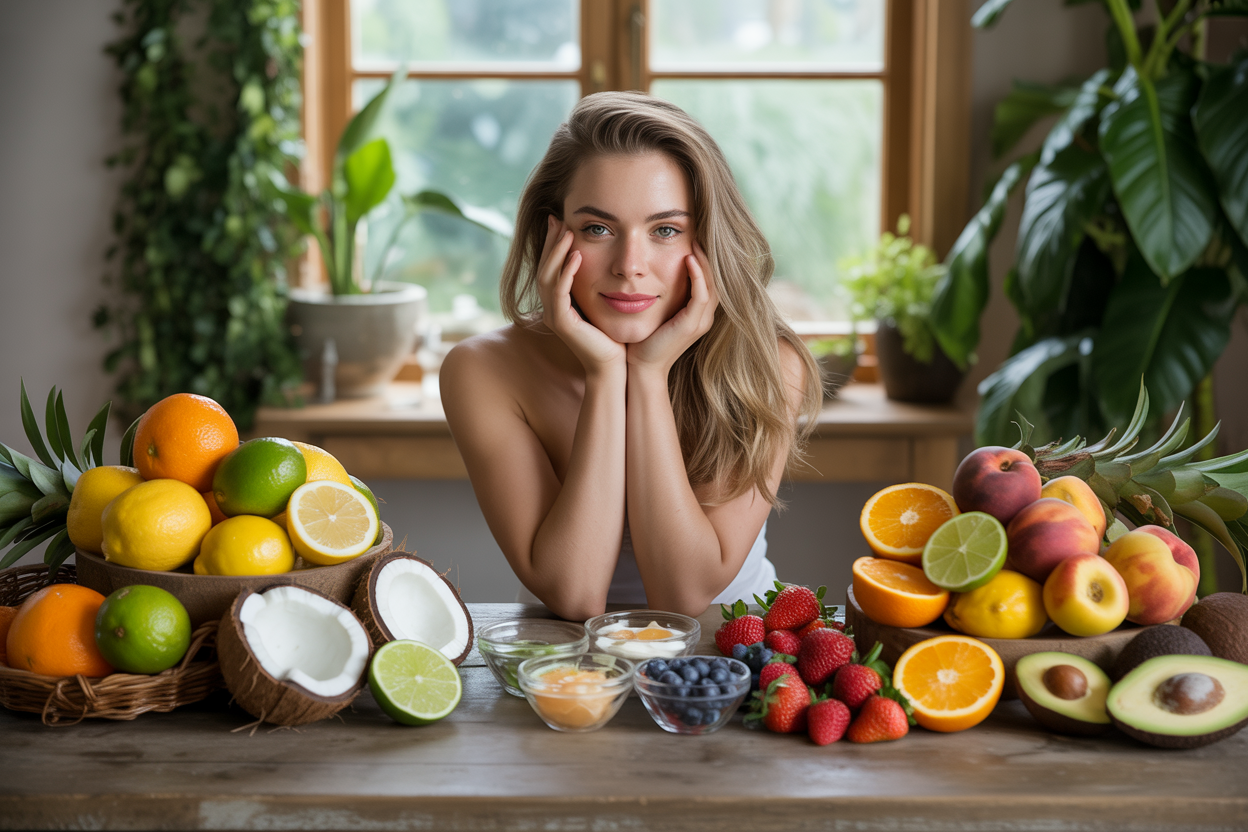
Your kitchen is already stocked with powerful hair care ingredients that can transform your hair naturally. Citrus fruits like oranges and lemons boost hair strength, while tropical options like avocados and coconuts provide deep moisture your strands crave. Berries pack antioxidants that promote growth, and stone fruits help keep your scalp healthy and flake-free.
The best part? You don't need expensive salon treatments when nature offers these simple solutions. Start experimenting with DIY fruit masks and rinses using what's already in your fridge. Your hair will thank you for ditching harsh chemicals and embracing these gentle, nutrient-rich alternatives that deliver real results without breaking the bank.


.png)
Comments
Post a Comment