Natural Sugar in Fruits: Good or Bad?
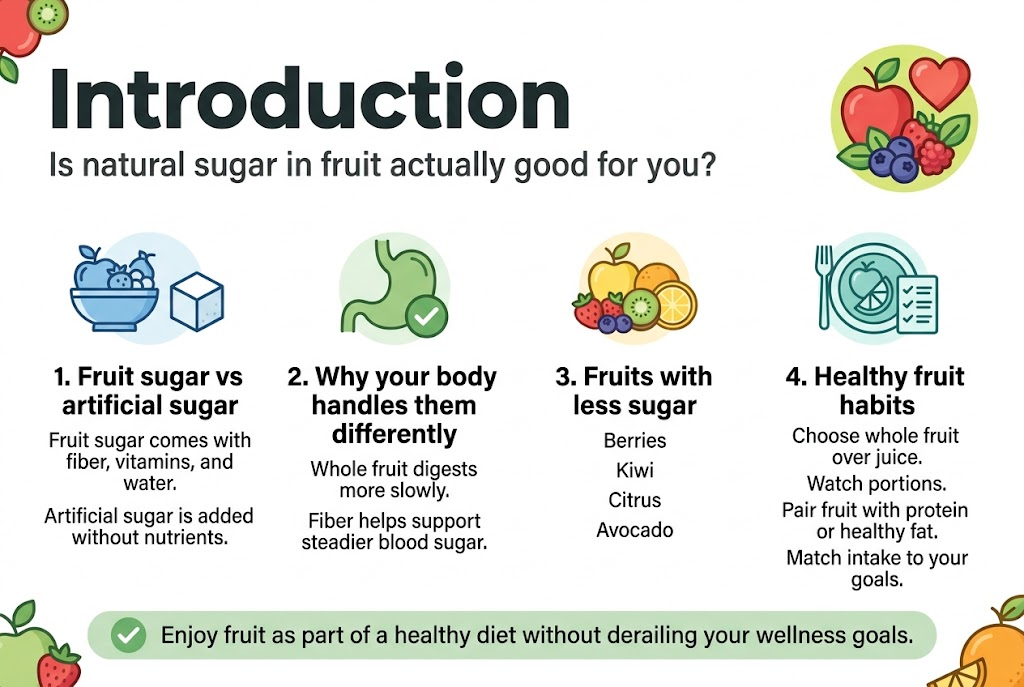
Fruit lovers and health-conscious eaters often wonder: is natural sugar in fruits actually good for you, or should you be worried about those sweet bites adding up?
This guide is for anyone trying to make smarter food choices, whether you're managing your weight, dealing with blood sugar concerns, or just wanting to eat healthier without giving up the foods you love.
We'll break down the real differences between fruit sugar vs artificial sugar and why your body handles them so differently. You'll also discover which fruits have less sugar and how to enjoy fruit as part of a healthy diet without derailing your wellness goals. Finally, we'll cover practical tips for healthy fruit consumption that work with your lifestyle and health needs.
Understanding Natural Sugars in Fruits vs Artificial Sugars
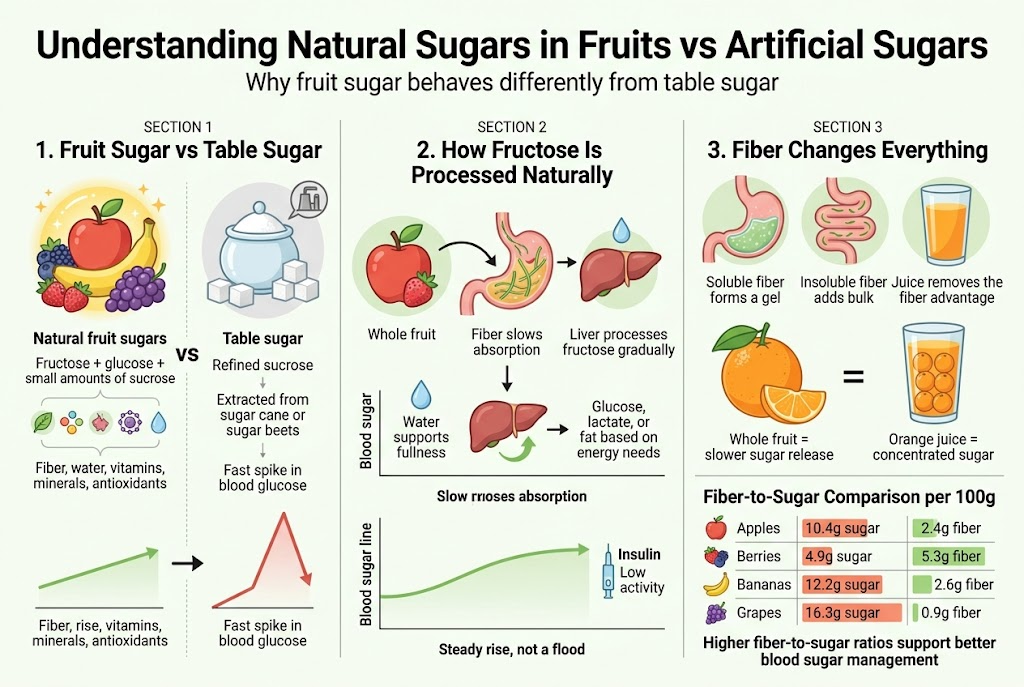
What makes fruit sugar different from table sugar
The main difference between natural sugar in fruits and table sugar lies in their molecular structure and origin. Table sugar, or sucrose, is a refined product extracted from sugar cane or sugar beets. It's a simple disaccharide made of glucose and fructose bonded together. When you eat table sugar, your body breaks it down quickly, causing rapid spikes in blood glucose levels.
Fruit sugar vs artificial sugar becomes clearer when you look at the complete package. Fruits contain primarily fructose, along with glucose and small amounts of sucrose. But here's the game-changer: fruits don't deliver sugar in isolation. They come packed with vitamins, minerals, antioxidants, and water that work together to slow sugar absorption.
The concentration matters too. An apple contains about 19 grams of natural sugars spread throughout its fibrous structure, while a tablespoon of table sugar delivers 12 grams of concentrated sucrose with zero additional nutrients. Your body receives fruit sugars gradually as it works through the fruit's cellular structure, creating a completely different metabolic experience.
How your body processes fructose naturally
When you consume fructose from whole fruits, your liver handles the processing differently than it does with refined sugars. Natural fructose gets metabolized slowly because it arrives with fiber, water, and other compounds that regulate its absorption rate.
Your digestive system treats whole fruit fructose as part of a complex food matrix. The fiber creates physical barriers that slow down sugar release, while the fruit's water content helps with hydration and creates a feeling of fullness. This natural packaging system prevents the overwhelming flood of fructose that occurs with processed foods.
The liver converts fructose into glucose, lactate, or fat depending on your body's current energy needs. With whole fruits, this process happens gradually over several hours, allowing your metabolism to adjust appropriately. Your pancreas doesn't need to release massive amounts of insulin because the sugar enters your bloodstream steadily rather than all at once.
The fiber advantage that changes everything
Fiber transforms how your body handles natural sugar in fruits completely. This indigestible plant material acts like a natural speed bump for sugar absorption, creating a time-release effect that keeps your blood sugar stable.
Soluble fiber found in fruits like apples and oranges forms a gel-like substance in your digestive tract. This gel slows gastric emptying, meaning food leaves your stomach more gradually. The result? Sugar enters your bloodstream at a controlled pace instead of rushing in all at once.
Insoluble fiber adds bulk and helps you feel satisfied with smaller portions. When you eat an orange, you're getting about 3 grams of fiber along with its natural sugars. Compare this to drinking orange juice, where the fiber has been removed and you can easily consume the sugar equivalent of 4-5 oranges in minutes.
The fiber content varies significantly among fruits:
| Fruit | Sugar Content (per 100g) | Fiber Content (per 100g) |
|---|---|---|
| Apples | 10.4g | 2.4g |
| Berries | 4.9g | 5.3g |
| Bananas | 12.2g | 2.6g |
| Grapes | 16.3g | 0.9g |
This fiber-to-sugar ratio explains why some fruits are better choices for healthy fruit consumption and blood sugar management than others.
Health Benefits of Consuming Fruit Sugars
Essential vitamins and minerals packaged with natural sweetness
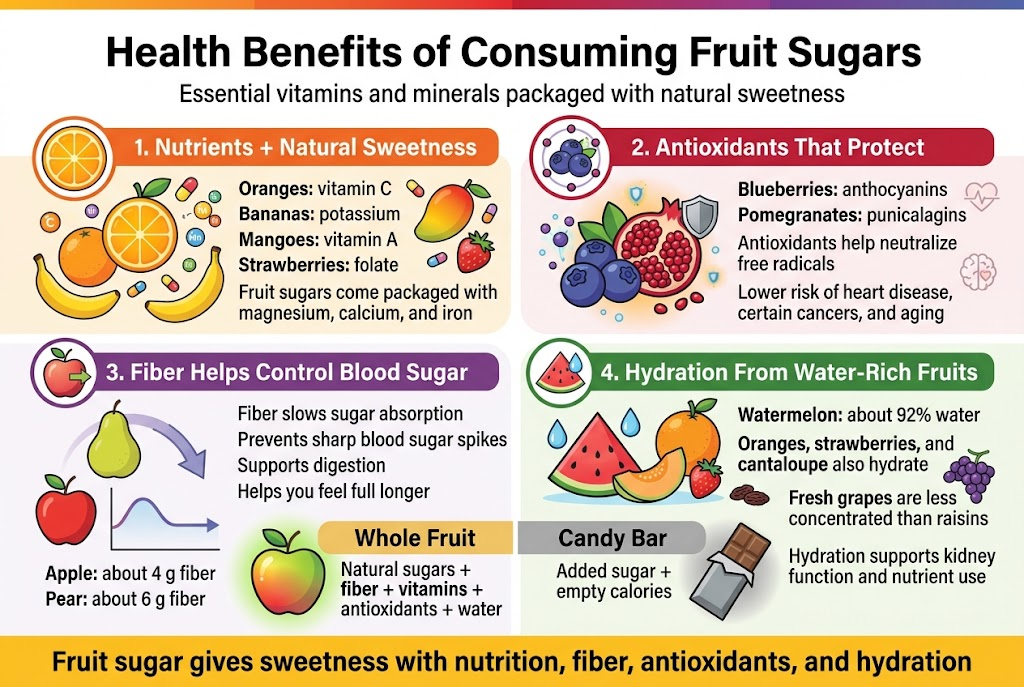
When you bite into a juicy orange or savor a handful of berries, you're getting so much more than just natural sugar in fruits. Each piece delivers a powerhouse of essential nutrients that your body craves. Oranges pack vitamin C that boosts your immune system, while bananas provide potassium for heart health and muscle function.
Mangoes deliver vitamin A for eye health, and strawberries offer folate that supports cell division and DNA repair. Unlike processed sweets that provide empty calories, fruits bundle their natural sugars with minerals like magnesium, calcium, and iron. This nutrient density means you're nourishing your body while satisfying your sweet tooth.
The beauty of fruit sugar vs artificial sugar becomes clear when you compare a candy bar to an apple. That apple gives you vitamin C, potassium, and boron for bone health, all wrapped up with its natural sweetness. Your taste buds get the satisfaction they're looking for, but your cells receive the building blocks they need to function properly.
Antioxidants that fight disease and aging
Fruits deliver some of nature's most potent antioxidants alongside their natural sugars. Blueberries contain anthocyanins that protect brain cells and may slow cognitive decline. Pomegranates offer punicalagins that support heart health and may reduce inflammation throughout your body.
These protective compounds work like tiny bodyguards, neutralizing harmful free radicals that can damage your cells and accelerate aging. The vibrant colors you see in fruits - the deep purple of grapes, the bright red of cherries, the golden orange of peaches - signal the presence of these powerful antioxidants.
Research shows that people who eat antioxidant-rich fruits regularly have lower rates of heart disease, certain cancers, and age-related conditions. The natural sugars in these fruits help your body absorb and utilize these protective compounds more effectively than isolated supplements.
Fiber content that regulates blood sugar spikes
Here's where natural sugar in fruits really shines compared to processed alternatives. The fiber in whole fruits acts like a natural speed bump for sugar absorption. When you eat an apple, the fiber slows down how quickly the fructose enters your bloodstream, preventing those sharp blood sugar spikes that come with candy or soda.
This fiber creates a steady, sustained energy release rather than the crash-and-burn cycle of refined sugars. A medium apple contains about 4 grams of fiber, while a pear provides around 6 grams. This soluble and insoluble fiber doesn't just help with blood sugar - it also promotes digestive health and helps you feel full longer.
The combination of natural fruit sugars with fiber explains why whole fruits rarely cause the same metabolic problems as added sugars. Your body processes them more gently, maintaining better blood sugar control and reducing the risk of insulin resistance over time.
Hydration benefits from water-rich fruits
Many fruits are natural hydration heroes, combining their sweet taste with significant water content. Watermelon is about 92% water, making it an excellent choice for staying hydrated while enjoying natural sweetness. Oranges, strawberries, and cantaloupe all provide substantial hydration along with their natural sugars and nutrients.
This water content helps your kidneys process the natural fruit sugars more efficiently while supporting overall cellular function. When you're properly hydrated, your body can better regulate blood sugar levels and metabolize nutrients effectively.
Water-rich fruits also tend to be lower in sugar concentration per serving compared to dried fruits. A cup of fresh grapes contains less concentrated sugar than a quarter cup of raisins, making fresh options better choices for healthy fruit consumption when you're monitoring your sugar intake.
Potential Concerns with Fruit Sugar Consumption
High fructose levels in certain fruits
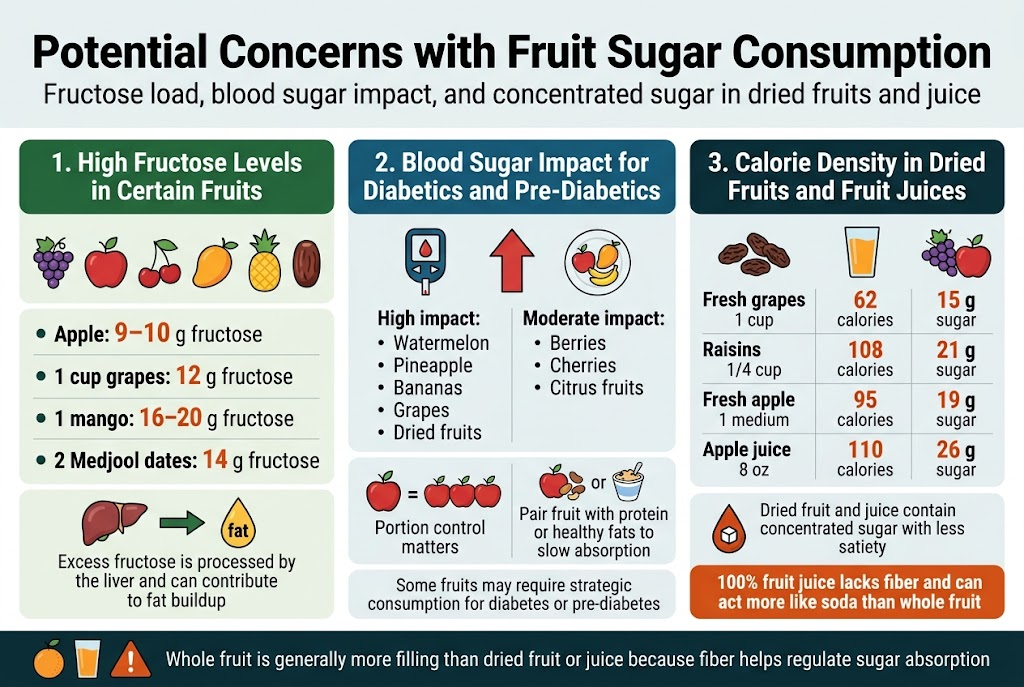
Some fruits pack surprisingly high amounts of fructose, which can catch health-conscious people off guard. Grapes, cherries, and apples contain significant fructose concentrations that rival those found in processed foods. A medium apple delivers about 9-10 grams of fructose, while a cup of grapes provides around 12 grams.
The liver processes fructose differently than glucose, converting it directly into fat when consumed in large quantities. This metabolic pathway bypasses the normal glucose regulation system, potentially leading to fatty liver disease and metabolic dysfunction when fructose intake becomes excessive.
Tropical fruits like mangoes and pineapples also deliver substantial fructose loads. A single mango can contain 16-20 grams of fructose, making it easy to exceed recommended daily limits when enjoying these sweet treats. Even seemingly innocent dates pack an enormous fructose punch, with just two Medjool dates providing about 14 grams.
Blood sugar impact for diabetics and pre-diabetics
People managing diabetes or pre-diabetes face unique challenges with natural sugar in fruits. While fruits offer valuable nutrients, their natural sugars can still trigger blood glucose spikes that require careful monitoring and planning.
The glycemic index varies dramatically between fruits, making some better choices than others. Watermelon and pineapple rank high on the glycemic scale, causing rapid blood sugar increases. Meanwhile, berries, cherries, and citrus fruits tend to have more moderate impacts due to their fiber content and lower sugar concentrations.
Portion control becomes critical for anyone with blood sugar concerns. A small apple might be manageable, but eating three apples in one sitting could send glucose levels soaring. The timing of fruit consumption also matters - pairing fruits with protein or healthy fats can help slow sugar absorption and minimize blood glucose spikes.
Pre-diabetics often discover that certain fruits they once enjoyed freely now require strategic consumption. Bananas, grapes, and dried fruits frequently need to be limited or eliminated to maintain healthy glucose levels.
Calorie density in dried fruits and fruit juices
Dried fruits and fruit juices concentrate natural sugars into calorie bombs that can derail weight management efforts. The dehydration process removes water while leaving all the sugars behind, creating products with 4-6 times the calorie density of fresh fruits.
A quarter-cup of raisins contains the same amount of sugar as nearly two cups of fresh grapes, but the concentrated version goes down much faster and provides less satiety. This makes it incredibly easy to overconsume calories without feeling satisfied.
Fruit juices present even greater concerns. A 12-ounce glass of apple juice delivers about 165 calories and 39 grams of sugar - equivalent to eating 3-4 medium apples, minus all the beneficial fiber. The liquid form bypasses natural satiety signals, allowing people to consume massive amounts of fructose health effects without realizing it.
| Food Item | Serving Size | Calories | Sugar Content |
|---|---|---|---|
| Fresh grapes | 1 cup | 62 | 15g |
| Raisins | 1/4 cup | 108 | 21g |
| Fresh apple | 1 medium | 95 | 19g |
| Apple juice | 8 oz | 110 | 26g |
Even "100% natural" fruit juices lack the fiber that helps regulate sugar absorption, making them closer to soda than whole fruit in terms of metabolic impact. This concentrated sugar delivery system can contribute to weight gain and blood sugar instability, especially when consumed regularly throughout the day.
Which Fruits Offer the Best Sugar Balance
Low-sugar fruits for weight management
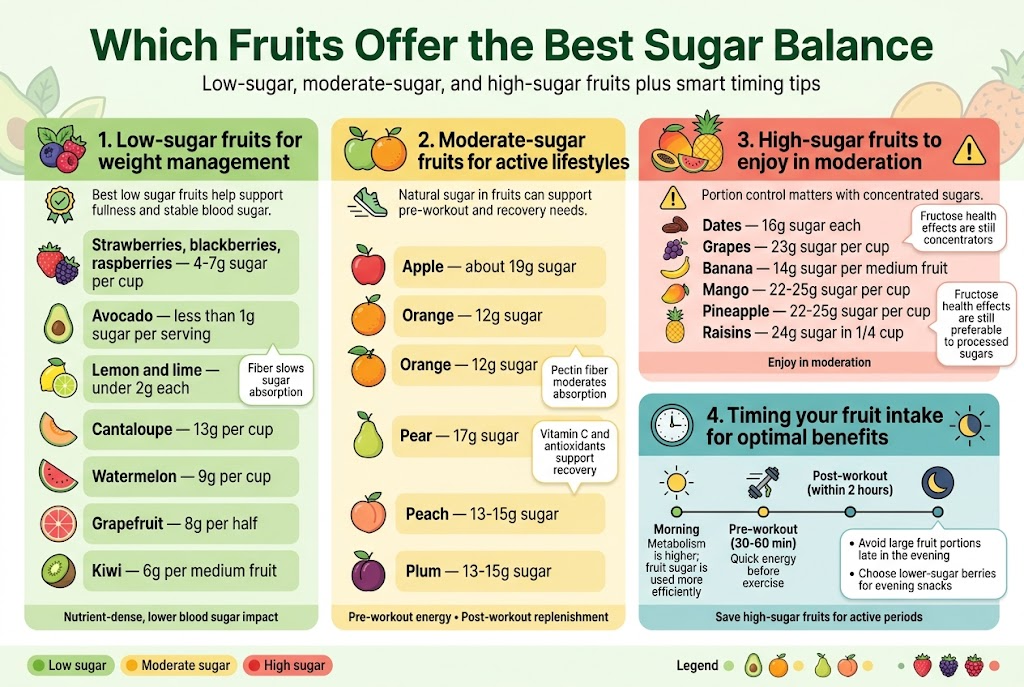
When you're watching your weight, best low sugar fruits become your perfect allies. Berries top the list – strawberries, blackberries, and raspberries pack just 4-7 grams of natural sugar per cup while delivering massive amounts of fiber and antioxidants. This fiber helps slow sugar absorption and keeps you feeling full longer.
Avocados contain less than 1 gram of sugar per serving and provide healthy fats that support satiety. Lemons and limes are practically sugar-free at under 2 grams each, making them ideal for flavoring water and meals without adding calories.
Other excellent choices include:
-
Cantaloupe (13g sugar per cup, but high water content)
-
Watermelon (9g sugar per cup)
-
Grapefruit (8g sugar per half)
-
Kiwi (6g sugar per medium fruit)
These fruits support fruit sugar weight loss goals because they're nutrient-dense but won't spike your blood sugar dramatically.
Moderate-sugar fruits for active lifestyles
Active individuals need more energy, and moderate-sugar fruits provide the perfect balance of natural sugar in fruits and performance-supporting nutrients. Apples contain about 19 grams of sugar but come with pectin fiber that moderates absorption. Oranges offer 12 grams along with vitamin C for recovery.
Pears provide sustained energy with 17 grams of sugar plus fiber that prevents energy crashes. Peaches and plums fall into this category too, offering 13-15 grams of sugar with valuable vitamins and minerals.
For pre-workout fuel, these fruits provide quick energy without the artificial additives found in sports drinks. Post-workout, they help replenish glycogen stores naturally while supporting muscle recovery with their antioxidant content.
High-sugar fruits to enjoy in moderation
Some fruits pack significant sugar content and require mindful consumption. Dates contain 16 grams of sugar each – they're nature's candy. Grapes provide 23 grams per cup, while bananas offer 14 grams per medium fruit.
Mangoes and pineapples are tropical treats with 22-25 grams of sugar per cup. Dried fruits concentrate sugars even more – just 1/4 cup of raisins contains 24 grams.
These fruits aren't bad choices, but portion control matters. Their fructose health effects are still preferable to processed sugars, but eating large quantities can impact blood sugar and weight management goals.
Timing your fruit intake for optimal benefits
Strategic timing maximizes fruit benefits while minimizing potential downsides. Morning consumption aligns with your body's natural cortisol rhythm, helping process natural sugar in fruits more efficiently. Your metabolism runs higher early in the day, making it easier to utilize fruit sugars for energy rather than storage.
Pre-workout fruit (30-60 minutes before) provides readily available energy. Post-workout consumption within two hours helps replenish muscle glycogen stores when your body is most receptive to nutrient uptake.
Avoid large fruit portions late in the evening when your metabolism slows down. Instead, save high-sugar fruits for active periods and choose lower-sugar options like berries for evening snacks if needed.
Smart Strategies for Healthy Fruit Consumption
Portion Control Guidelines That Work
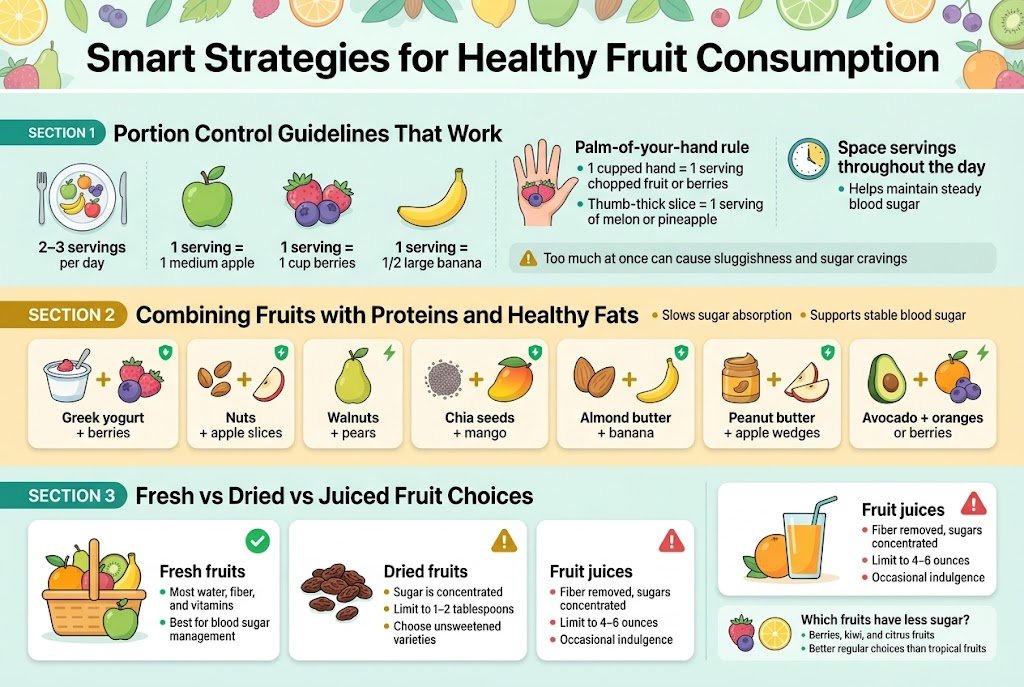
Your daily fruit intake doesn't need strict measuring cups or complicated calculations. A practical approach involves eating 2-3 servings of fruit per day, with one serving roughly equal to a medium apple, a cup of berries, or half a large banana. For healthy fruit consumption, spacing these servings throughout the day helps maintain steady blood sugar levels and prevents overwhelming your system with natural sugar in fruits.
The palm-of-your-hand rule works perfectly for most fruits. Cup your hands together - that's about one serving of chopped fruit or berries. For larger fruits like melons or pineapples, a slice about the thickness of your thumb represents one serving. This visual method eliminates guesswork while keeping portions reasonable.
Pay attention to your body's signals. If you feel sluggish or experience sugar cravings after eating fruit, you might be consuming too much at once. People following fruit sugar weight loss plans often benefit from smaller, more frequent fruit portions paired with other nutrients.
Combining Fruits with Proteins and Healthy Fats
Smart pairing transforms fruit from a simple snack into a balanced mini-meal. Adding protein and healthy fats slows down the absorption of natural sugar in fruits, preventing blood sugar spikes and extending satiety. Greek yogurt with berries creates an ideal combination - the protein buffers the fruit's natural sweetness while providing sustained energy.
Nuts and seeds make excellent fruit companions. Almonds with apple slices, walnuts with pears, or chia seeds sprinkled over mango chunks create satisfying combinations that support stable blood sugar. These pairings work especially well for people concerned about fructose health effects or those managing diabetes.
Nut butters offer another simple solution. A tablespoon of almond butter with banana slices or peanut butter with apple wedges provides the perfect balance of nutrients. Avocado pairs surprisingly well with fruits like oranges or berries, adding healthy monounsaturated fats that enhance nutrient absorption.
Fresh vs Dried vs Juiced Fruit Choices
Fresh fruits always win the nutritional race. They contain the most water, fiber, and vitamins while delivering natural sugar in fruits in its most balanced form. The fiber content slows sugar absorption, making fresh options the smartest choice for blood sugar management and overall health.
Dried fruits concentrate both nutrients and sugars. A small handful of raisins contains the same sugar as several fresh grapes but without the water content that helps you feel full. If you choose dried fruits, limit portions to about 1-2 tablespoons and pair them with protein or nuts. Look for unsweetened varieties without added sugars or preservatives.
Fruit juices, even 100% pure versions, strip away beneficial fiber while concentrating sugars. A glass of orange juice contains the sugar from multiple oranges without the satiety that comes from eating whole fruit. When you do drink juice, dilute it with water or sparkling water, limit portions to 4-6 ounces, and treat it as an occasional indulgence rather than a daily habit.
Which fruits have less sugar becomes important when choosing between fresh, dried, and juiced options. Berries, kiwi, and citrus fruits generally contain less sugar per serving compared to tropical fruits, making them better choices for regular consumption regardless of form.
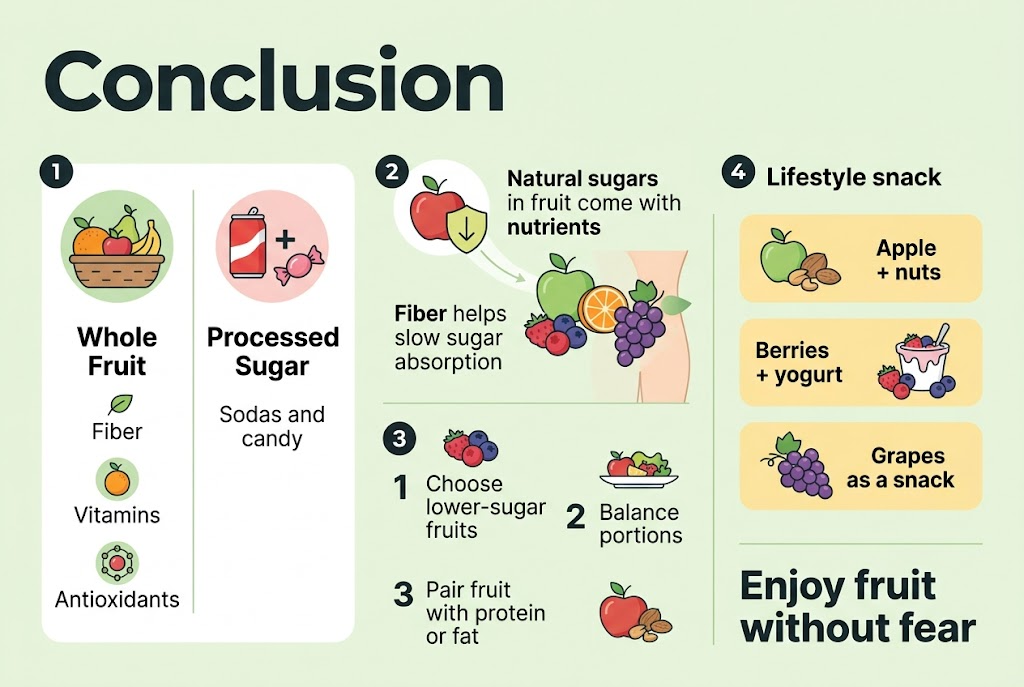
Natural sugars found in fruits come packaged with fiber, vitamins, and antioxidants that your body needs, making them vastly different from the processed sugars hiding in sodas and candy. While fruit does contain fructose, the whole package delivers nutrients that slow sugar absorption and provide real health benefits. Even people watching their sugar intake can enjoy fruits by choosing lower-sugar options like berries and balancing their portions throughout the day.
The key is being smart about your choices rather than avoiding fruit altogether. Pair your apple with some nuts, enjoy berries in your morning yogurt, or grab a handful of grapes as an afternoon snack. Your body knows how to handle the natural sugars in whole fruits, especially when they come with all their original nutrients intact. Don't let sugar fears keep you from enjoying one of nature's most nutritious and delicious food groups.


.png)
Comments
Post a Comment